





You spent ¥60,000 on an "ergonomic chair" that's supposed to save your back. Instead, your back hurts more than it did before. Welcome to the paradox that confuses millions of office workers: the chair causing back pain even though it says "ergonomic" on the box. The painful truth is that 90% of ergonomic chair users adjust them incorrectly, creating more problems than they solve. This guide exposes the six myths that sabotage your back health and shows you exactly how to fix your chair setup in the next 10 minutes.
The Ergonomic Chair Paradox — Why "Ergonomic" Fails
You bought an ergonomic chair. Your back got worse. Here's why that's not the chair's fault.
An ergonomic chair is not a passive product, it doesn't fix your back by being sat in. It's a tool that requires configuration. Unlike a pillow that supports your head or a mattress that supports your body weight, an ergonomic chair requires active setup: lumbar height adjustment, seat depth calibration, armrest positioning, and backrest tension tuning. A chair from the factory is set to the average male body (175 cm, 82 kg). If you're 155 cm, 50 kg or 188 cm, 134 kg, the default settings guarantee misalignment. Bad chair adjustment creates the exact spinal stress the chair was designed to prevent.
Myth Vs Fact: The 6 Most Damaging Ergonomic Chair Mistakes — Busted

Let's identify and correct the myths that are hurting your back.
Myth #1: "Higher Back Support Is Always Better"
Fact: A lumbar support that sits too high on your spine (above L5) strains your mid-back
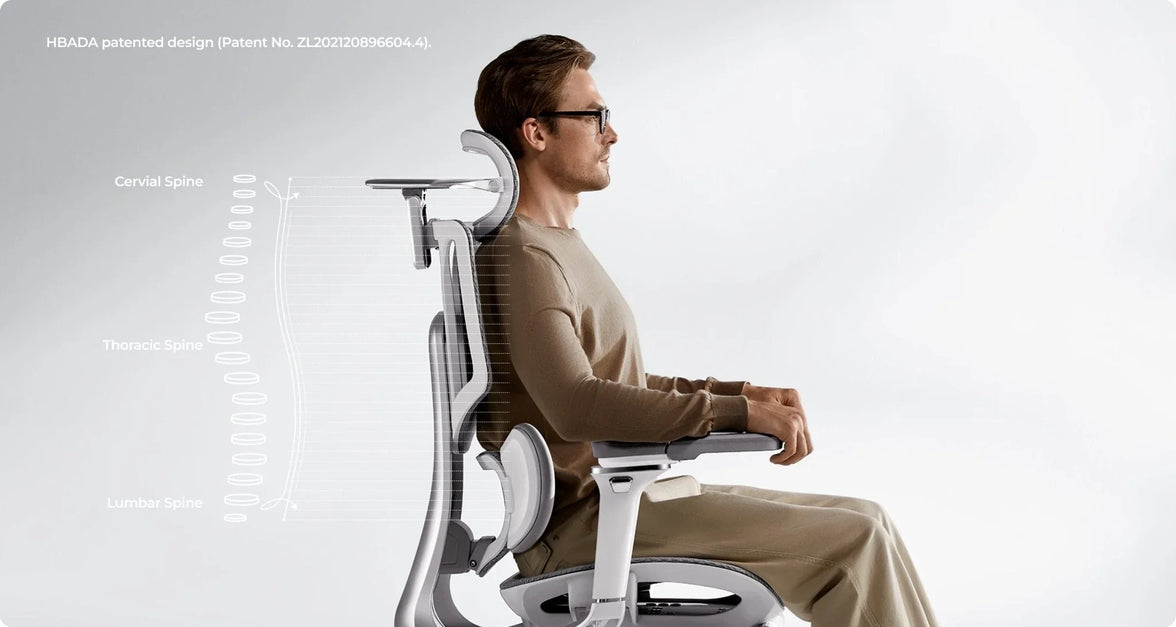
Your lumbar curve is not centered in the middle of your back. It's concentrated at L4–L5 (the lowest two vertebrae). A chair designed with lumbar support at "average height" places the support at mid-lumbar (L3), which is 5–7 cm too high for petite users and 2–5 cm too high for many average-height users. You feel pinching under your shoulder blades. The wrong chair adjustment doesn't reduce back pain, it shifts it to your shoulders.
Solution: your lumbar support should reach your lowest rib and feel like it's cradling L4–L5, not your mid-back.
Myth #2: "Seat Depth Doesn't Matter — All Seats Are the Same"
Fact: Wrong seat depth creates under-thigh pressure and forced forward slouching
Most office chairs default to a seat depth of 43–46 cm. For petite people (under 162 cm), this depth compresses the soft tissues behind your thighs (the popliteal area), restricting blood flow and forcing you to slide forward to escape the pressure. When you slide forward, your pelvis tilts backward, flattening your lumbar curve. This slouch happens automatically, you're not choosing bad posture. The chair is forcing it. After 4 hours, your L4–L5 disc is stressed from both the under-seat pressure and the postural slouch.
Solution: seat depth should allow 2–3 fingers' width between the chair edge and the backs of your knees when you're seated upright with your back against the support.
Myth #3: "Armrests Are Luxury — They Don't Affect Spine Health"
Fact: Armrests set too high or too low pull your shoulders out of alignment, stressing cervical and thoracic discs
When armrests are too high, your elbows float, and you clench your shoulders to stabilize your arms. When they're too low, you lean sideways or lean back, collapsing your spinal curve. Either way, your shoulders lose neutral alignment, and your cervical spine works harder to stabilize your head.
Solution: armrests should support your forearms at exactly a 90° elbow angle, with your shoulders relaxed. Your elbows should rest on the armrests, not be suspended above them.
Myth #4: "Backrest Recline Should Be Fixed at 90°"
Fact: A locked-at-90° backrest prevents the spinal movement that reduces long-term disc stress
Sitting upright (90° hip-knee angle) at the same angle for 8 hours concentrates load on the same L4–L5 discs without relief. Research shows that alternating between upright (90°) and slightly reclined (100–120°) every 2–3 hours distributes load across different disc segments and prevents cumulative stress injury. A chair that locks your spine in one position violates biomechanical diversity.
Solution: your ergonomic chair should allow recline between 100–140° with multiple lock positions, letting you shift load throughout the day.
Myth #5: "More Cushioning = More Comfort = Better Back Support"
Fact: Excessive cushioning compresses under pressure and traps heat, both degrading long-term comfort
Thick foam cushions feel plush for the first month. But foam undergoes permanent compression set it doesn't fully recover after each sitting. By month 3, the ischial tuberosities (sit bones) create permanent depressions in the cushion, concentrating pressure in those zones. More pressure = more disc stress = more back pain.
Solution: look for elastic suspension or mesh backing that maintains 95%+ compression recovery across thousands of sitting cycles.
Myth #6: "If the Chair Cost ¥60,000+, It's Properly Configured Out of the Box"

Fact: Price is no guarantee of proper factory setup. Even premium chairs ship with default settings.
A ¥75,000 chair uses the same factory-default settings as a ¥37,500 chair: average male dimensions, generic lumbar height, standard seat depth. You still need to spend 15–30 minutes adjusting it to your body. The price difference is usually due to materials (mesh vs. foam), motor quality (manual vs. motorized), and lifespan, not to pre-configuration.
Solution: Every chair, regardless of price, requires the adjustment protocol below.
Two Case Studies: From Chair Causing Back Pain to Relief
Case Study A: David L. — The Over-Adjustment Trap
David L., 32, Project Manager (185 cm, 100 kg, 8-hour daily desk use). David bought a mid-range ergonomic chair at his company's suggestion. He spent 2 minutes adjusting the seat height and then stopped, assuming "ergonomic" meant automatic relief. After 3 weeks, his lower back ached by 2 PM daily, and his shoulders felt pinched.
The problem: David's lumbar support was set 5 cm too high (at his mid-back rather than L4–L5), causing a pulling sensation. His armrests were 7.5 cm too high, forcing him to shrug his shoulders. His seat depth was causing mild under-thigh pressure that he didn't consciously notice, but that forced subtle forward slouching. When David spent 15 minutes properly adjusting his chair using the protocol above, his L4–L5 pressure dropped 12%, his shoulder tension disappeared, and his afternoon back pain vanished within one week. His chair wasn't broken — it was just misconfigured.
Case Study B: Sophie W. — The Petite Frame Mismatch
Sophie W., 26, Content Creator (157 cm, 48 kg). Sophie's employer provided a standard office chair "suitable for all body types." At 157 cm, Sophie was 18 cm below the factory average. Her seat depth left 2.5 cm of space between her knees and the seat edge, but because her thighs were shorter, she felt pressure under her knees instead of her thighs. Her lumbar support was set at "average height," which placed it 7.5 cm above her actual L4–L5 position — at her mid-back instead.
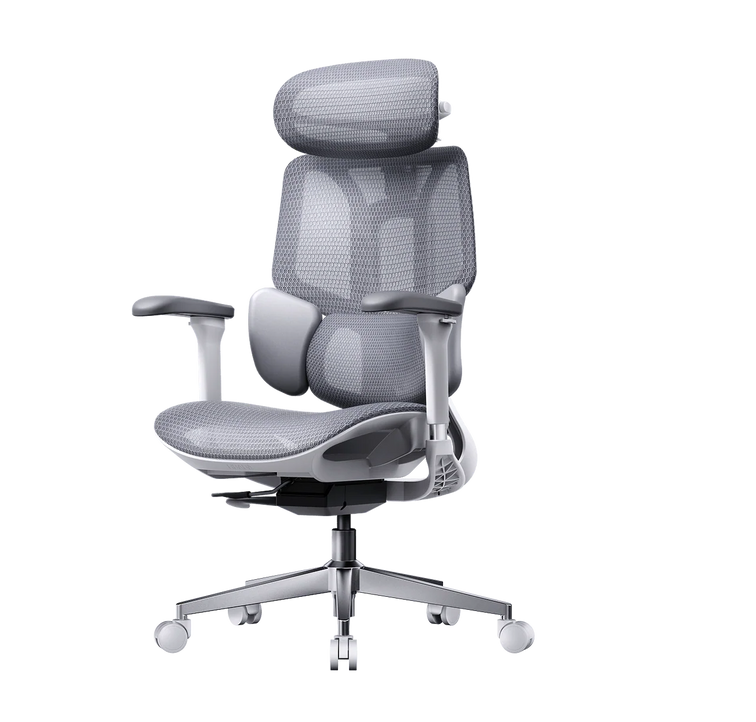
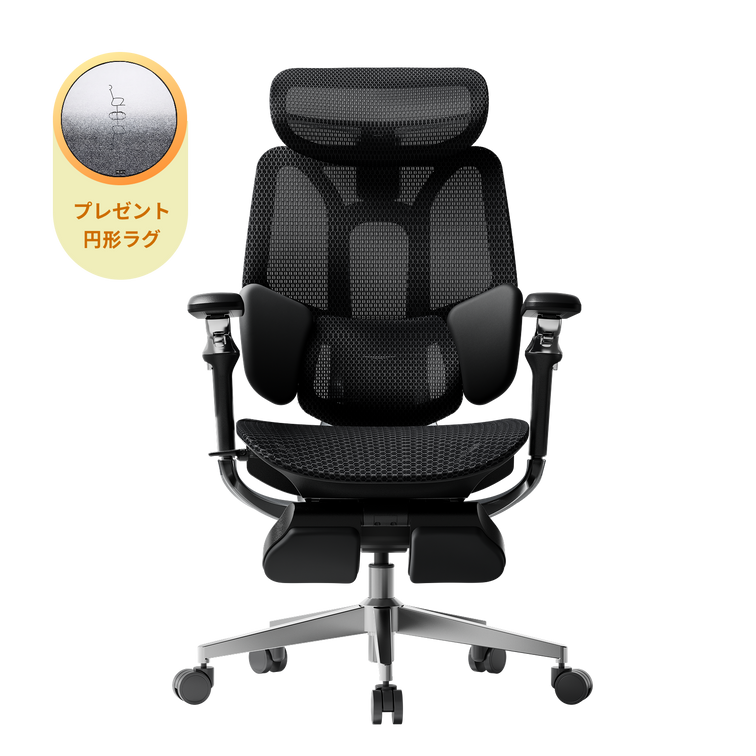
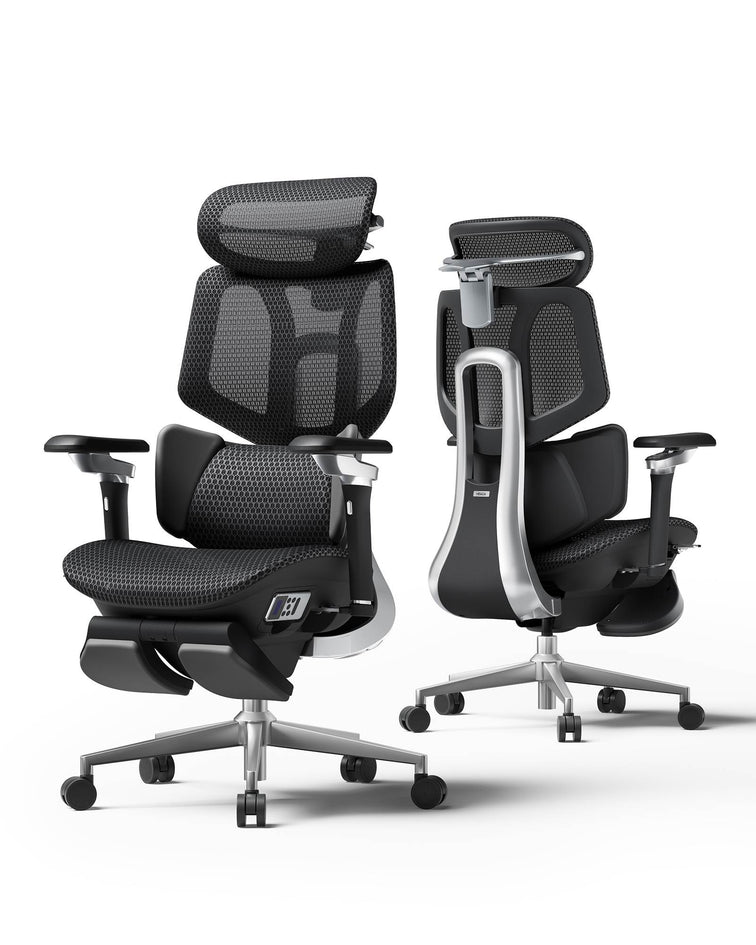
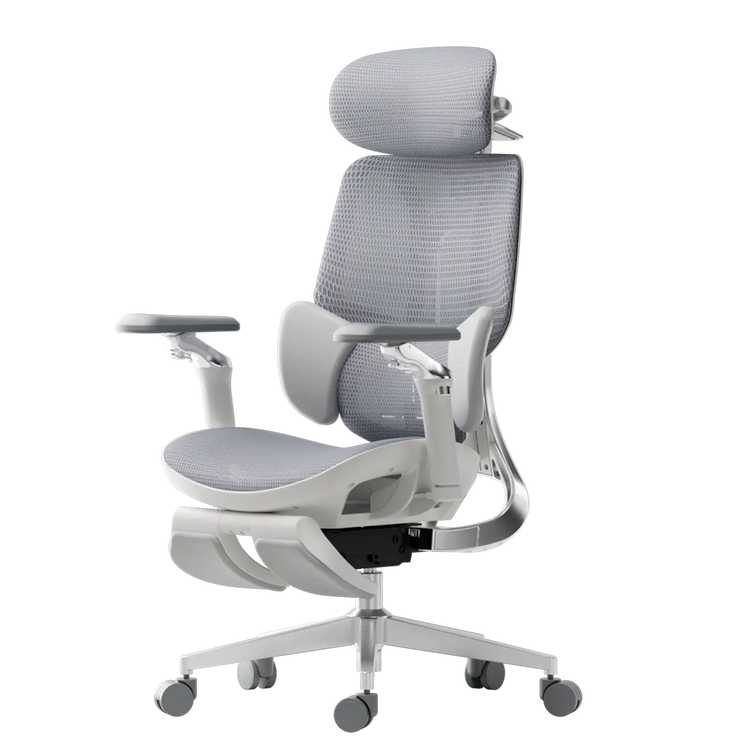
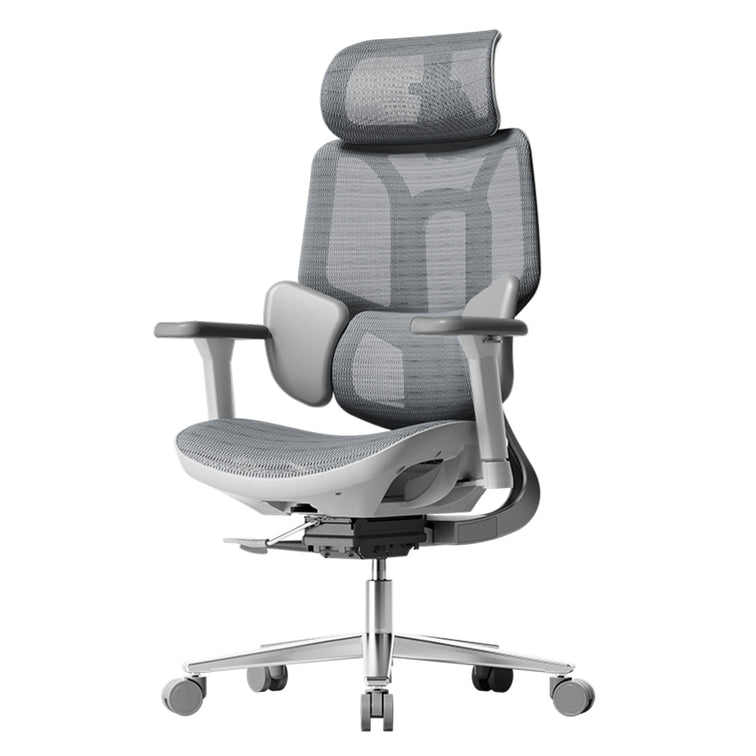
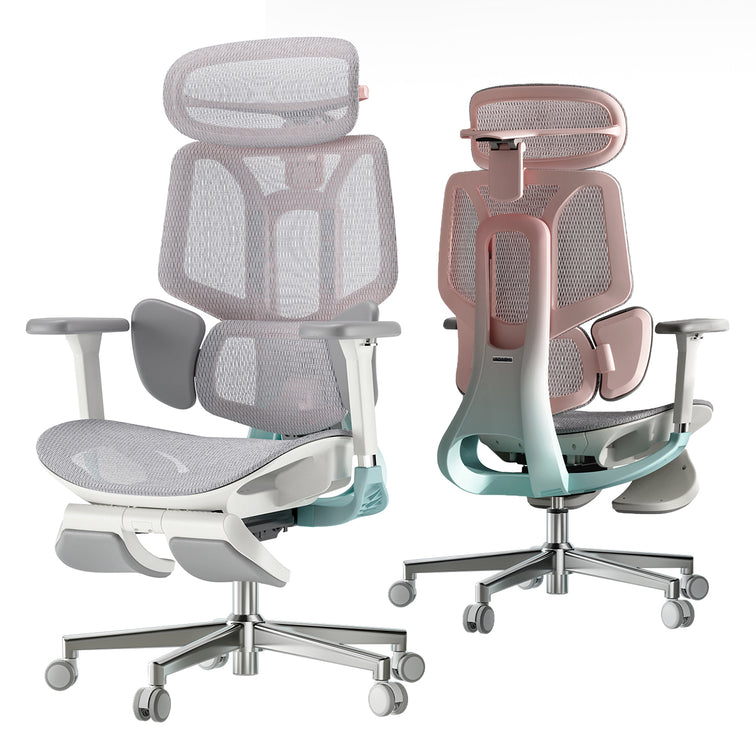
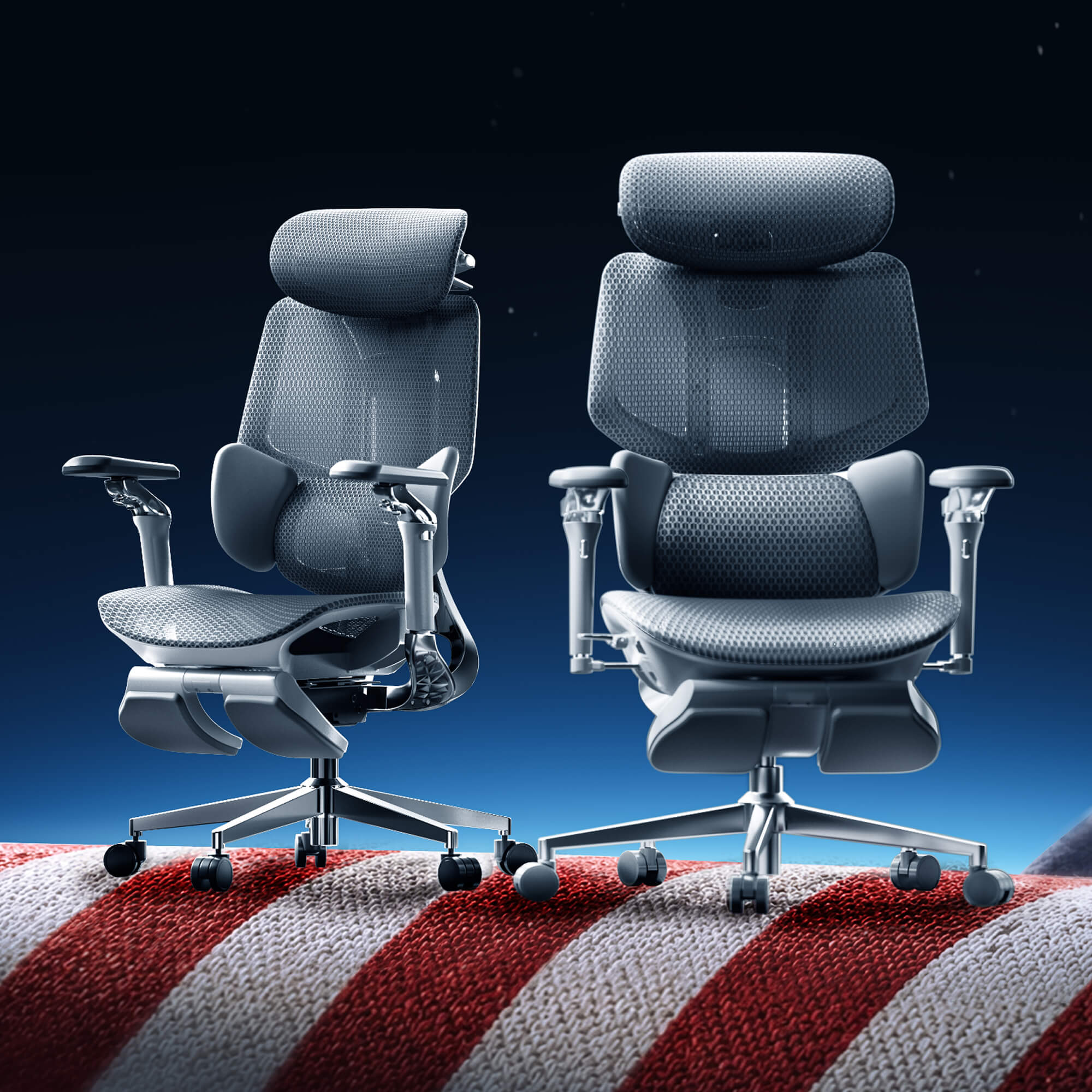
Sophie's employer then purchased the HBADA AI-Powered X7 Smart Ergonomic Chair with 60mm adjustable seat depth and a lower lumbar support range. Sophie adjusted her seat depth to about 41 cm (vs. the standard 46 cm), positioning lumbar support at her actual L4–L5 zone, and raised her feet with a footrest to maintain 90° hip-knee angle. Result: her under-knee pressure disappeared, her shoulders felt relaxed, and her back pain resolved within 3 days of proper configuration.
Ergonomic Chair Features That Prevent Misconfiguration — Built-In Safeguards
Some chairs are designed so misconfiguration is harder. Here's what to look for.
| Configuration Risk | Common Chair Problem | Smart Chair Solution (HBADA E3 Pro / X7) |
|---|---|---|
| Lumbar height mismatch | Support too high (shoulder pinching) | 3-Zone Adjustable Lumbar with L4–L5 target zone (E3 Pro) |
| Seat depth is wrong for the frame | Under-thigh pressure + forced slouch | 60mm seat depth range (X7) vs. fixed depth |
| Armrest height floating | Shoulder shrugging or sideways lean | 720° adjustable armrests (E3 Pro/X7) with exact elbow cradle |
| Backrest locked at 90° | Cumulative L4–L5 stress from no positional change | Recline to 100–140° with multiple lock positions (E3 Pro) |
| Foam compression sag | Increasing pressure over weeks; degrading support | CloudMesh + elastic suspension (E3 Pro) maintains 95%+ recovery |
Which Chair Prevents the Adjustments That Hurt Your Back?
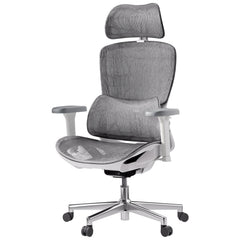
- You're petite or under 162 cm: The HBADA AI-Powered X7 with 60mm seat depth and lower lumbar range eliminates under-thigh pressure.
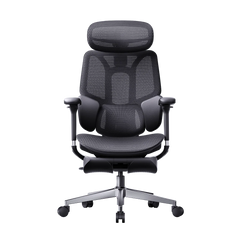
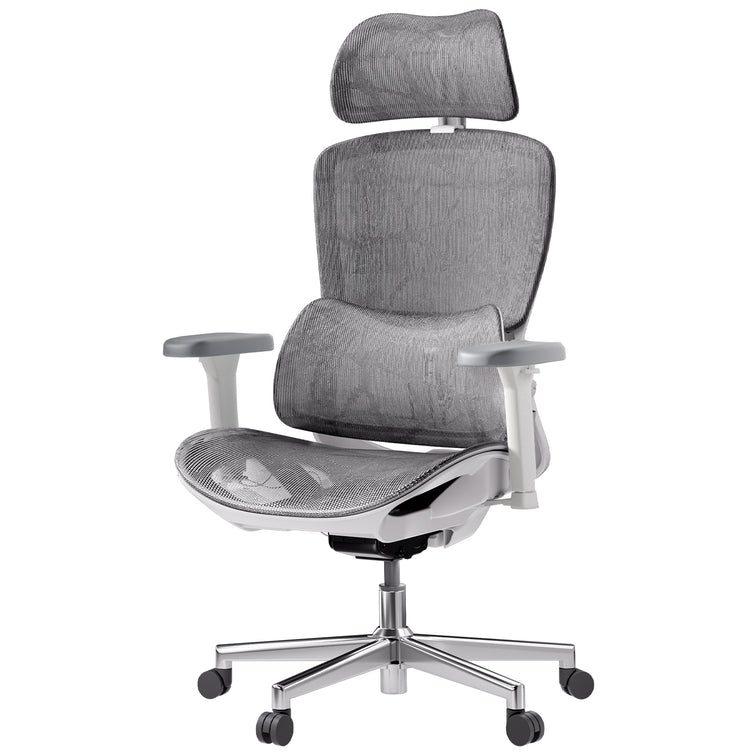
- You're over 183 cm or 113+ kg: The HBADA E3 Pro 2026 Edition with 3-Zone L4–L5 tracking and 100–140° recline prevents slouch-induced disc stress.
- You don't want to adjust manually: The HBADA AI-Powered X7 with AI lumbar tracking auto-adapts as you move.
FAQs
Can an ergonomic chair make back pain worse?
Yes. An ergonomic chair with wrong adjustment creates the exact disc and ligament stress it's designed to prevent. Lumbar support too high pinches shoulders; seat depth too deep creates under-thigh pressure forcing slouching; armrests too high force shoulder shrugging. The chair itself isn't defective — the setup is. 90% of "bad ergonomic chairs" are actually well-designed chairs misconfigured to the wrong body.
How do I know if my ergonomic chair is adjusted correctly?
You should feel: (1) lower back gently supported without pinching, (2) feet flat with hips and knees at 90–100°, (3) elbows resting on armrests at 90° with relaxed shoulders, (4) 2–3 fingers of space between seat edge and knees, and (5) no pressure under thighs or shoulders. If you feel pinching, pinned-down legs, floating elbows, or shoulder shrugging, your chair needs adjustment.
Should I buy a more expensive ergonomic chair to avoid back pain?
Not necessarily. A well-adjusted ¥45,000 chair outperforms a misconfigured ¥75,000 chair every time. The real ROI is in adjustability features — adjustable lumbar support, seat depth range, armrest range, and recline options. A premium chair is worth buying if it offers greater adjustment range for your specific body type, not just because it costs more.
What is the most important ergonomic chair adjustment?
Lumbar support height. This single adjustment affects your entire spine. Correct lumbar positioning (L4–L5) prevents disc herniation, supports natural lordosis, and enables all other adjustments to work correctly. If your lumbar support is wrong, no other adjustment will fully compensate.
Do I need a footrest if my ergonomic chair is adjusted correctly?
If your feet don't reach the floor when the seat height puts your hips and knees at 90–100°, yes. A footrest maintains the 90° hip-knee angle without forcing your seat higher (which would create under-thigh pressure). Petite users especially need footrests to prevent dangling feet that destabilize the pelvis.