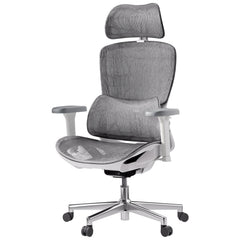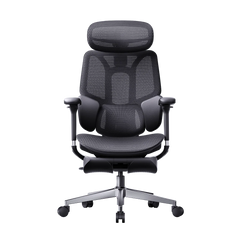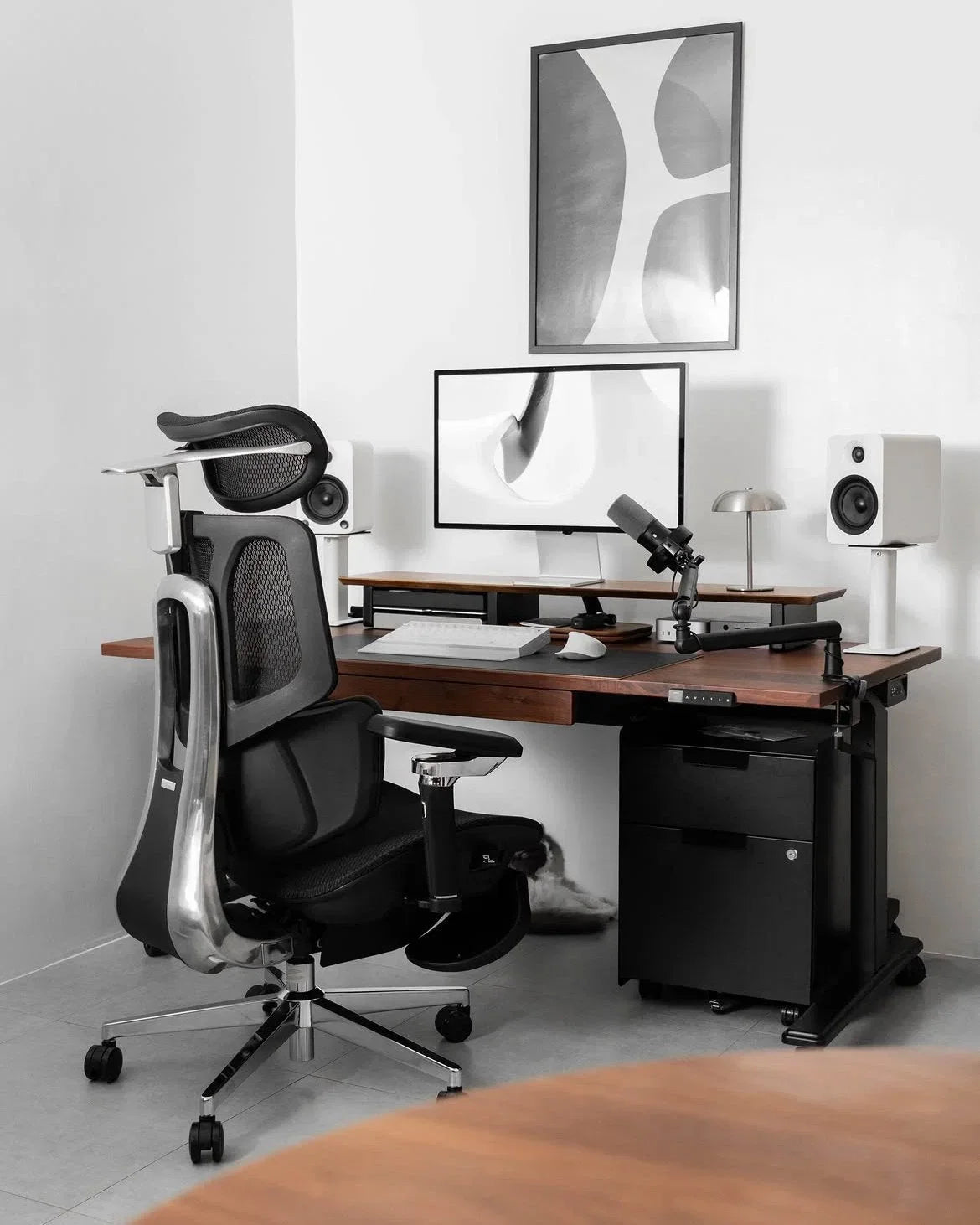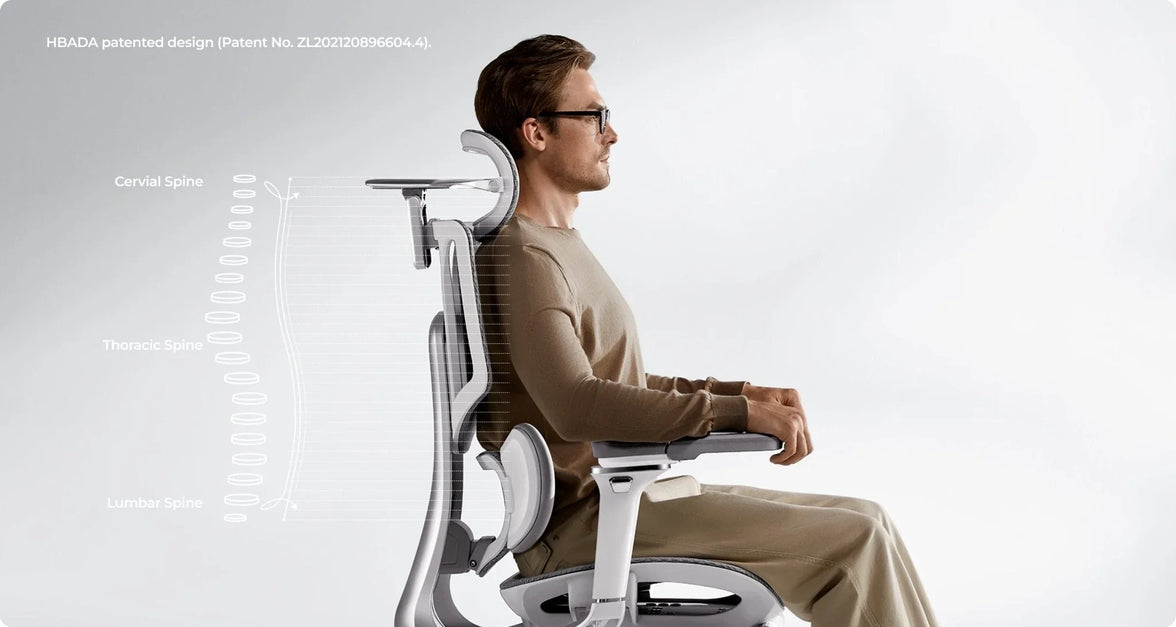
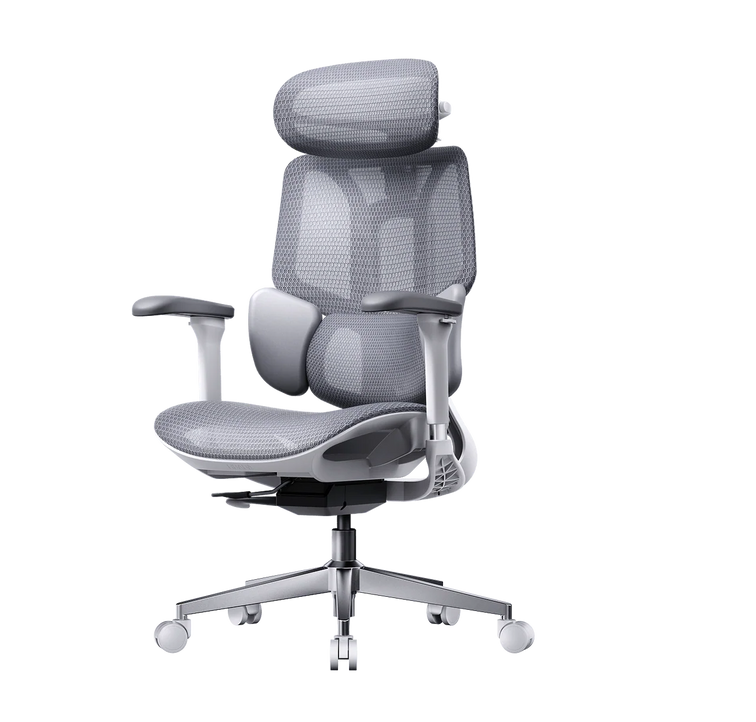
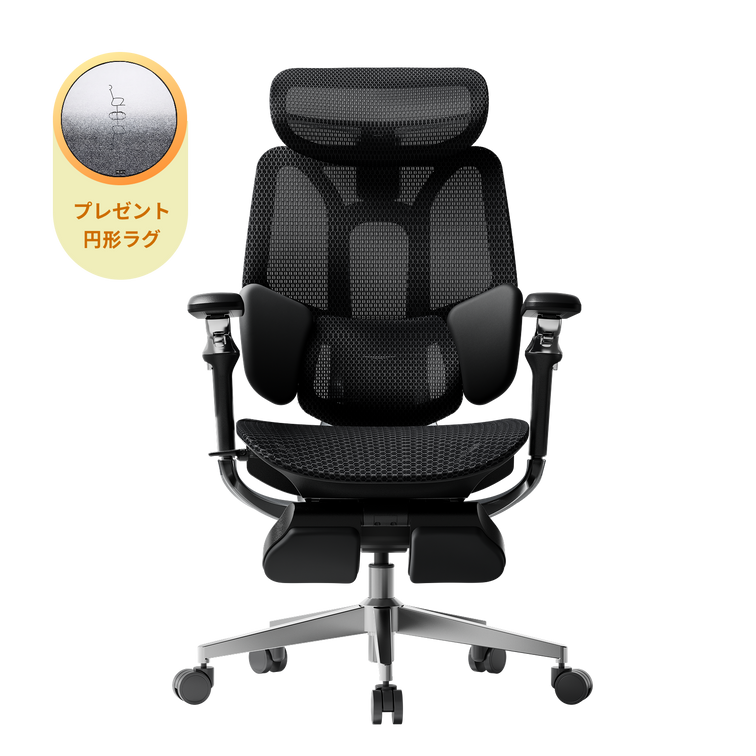
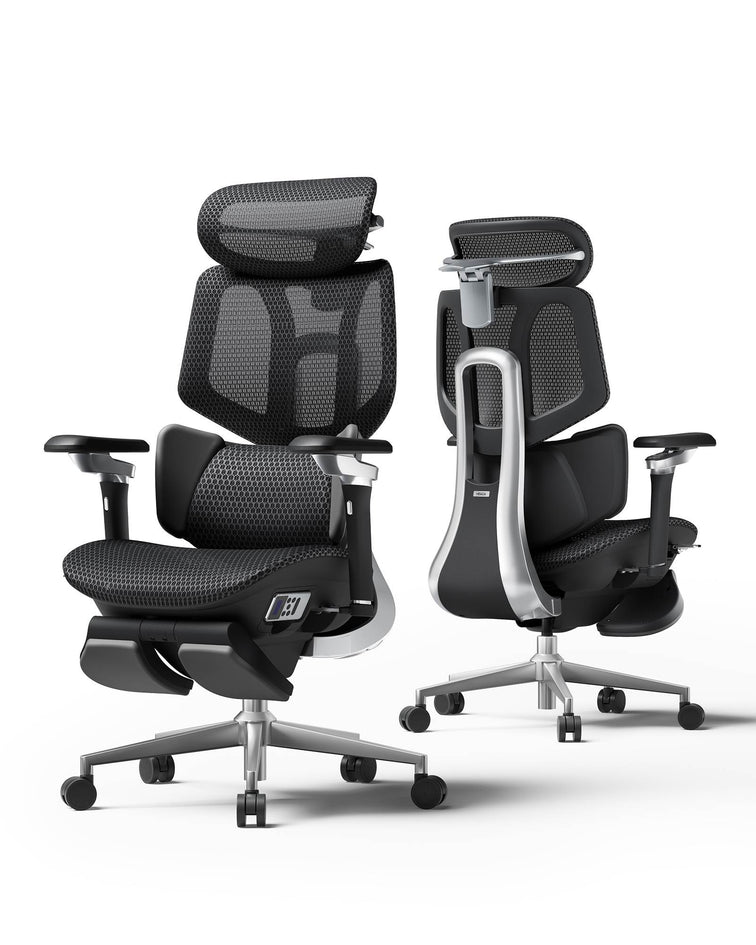
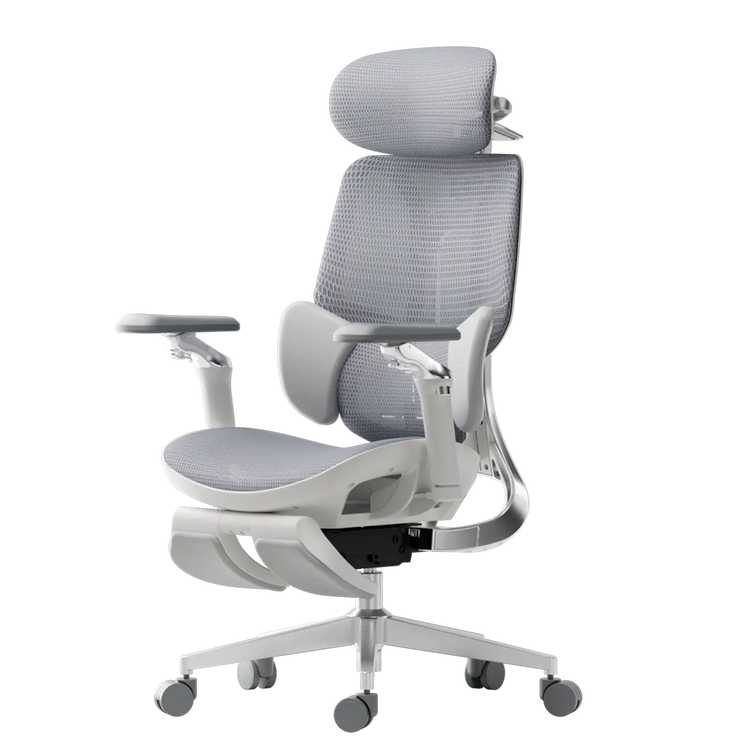


HBADA documents product credibility through model-specific IGR ergonomic certificates, SGS and SMQ test reports, regional electrical and electromagnetic compliance records, battery transportation documentation, and more than 100 supplied patent and design references covering whole chairs and key components.
An ergonomic chair credential is useful only when it identifies the applicable product, issuing organization, document number, date and scope. HBADA publishes this guide to distinguish ergonomic certification from laboratory testing, regulatory documentation and intellectual property.
The documents described on this page do not all prove the same thing. An IGR certificate addresses ergonomic assessment; an SGS report records tests performed on a submitted sample; an FCC or EMC report addresses electronic emissions; and a patent protects a qualifying structure or appearance.
What credentials does HBADA document?
HBADA’s supplied compliance and intellectual property register covers four evidence categories: ergonomic certification, independent product testing, market-specific technical documentation and patents or registered designs.
| Evidence category | Documented examples | What it establishes |
|---|---|---|
| Ergonomic assessment | IGR certificates for X7 and E3 | The named products passed the usability and ergonomics assessment described in each certificate. |
| Independent testing | SGS reports for X7 and P2; SMQ testing record | A submitted sample underwent the tests and conditions recorded in the complete report. |
| Technical compliance | FCC, ICES, EMC, RoHS, UN 38.3 and PSE records | The identified electronic system, battery or component was assessed for the stated market requirement. |
| Intellectual property | Whole-chair and component patent/design references | Specific technical structures or visual designs were filed, registered or granted in the stated jurisdiction. |
Are the HBADA X7 and E3 ergonomically certified?
Yes. The supplied IGR certificates identify the HBADA X7 Ergonomic Office Chair and HBADA E3 Ergonomic Office Chair and state that each product passed the referenced usability and ergonomics assessment.
Both certificates are dated July 23, 2024. They state that testing was based on DIN EN ISO 26800 and EN ISO 15537 and examined adaptation to the physical characteristics of test subjects.
- HBADA X7 — IGR ergonomic certificate dated July 23, 2024
- HBADA E3 — IGR ergonomic certificate dated July 23, 2024
Evidence: X7 IGR Certificate | E3 IGR Certificate

Scope:
The certificates apply to the products named in the documents. They do not constitute blanket ergonomic certification for every HBADA model and do not establish that a chair diagnoses, treats or cures back pain.
What do the HBADA SGS reports show?
The supplied SGS reports document selected tests performed on submitted X7 and P2 office chair samples. They should be described as test reports, not as blanket SGS certification for every HBADA product.
| Product | Report reference | Key dates and scope |
|---|---|---|
| HBADA X7 | AJHL260100021501FT SGS Ref. NBHL2601000791SD |
Received Jan. 12, 2026; tested Jan. 12–Feb. 3, 2026; report dated Feb. 4, 2026; selected tests requested by the applicant. |
| HBADA P2 | AJHL260100049301FT | Received Jan. 21, 2026; tested Jan. 21–Feb. 12, 2026; sample described as Office Chair, Style No. P2. |
Evidence: X7 SGS document | P216/P2 SGS document

The complete reports control the interpretation of the test scope and results. Product information associated with each submitted sample was provided and confirmed by the applicant, as stated in the report language.
What SMQ test documentation is recorded?
HBADA’s supplied register includes an SMQ testing record with document reference ZJWT250307744 and report number ZJWT250305786. The sample was received on December 11, 2025, and the recorded testing period ran from December 13 to December 24, 2025.
What X7 electrical and electronic documents are available?
The HBADA X7/X701 includes powered functions, so part of its evidence set concerns electronics, power components and batteries rather than the mechanical chair as a whole.
| Market or requirement | Reference | Applicable scope |
|---|---|---|
| United States FCC Part 15B | DNT2412130365E5709-08175 | X701 electronic system / electromagnetic compatibility |
| Canada ICES-003 | DNT2412130365E5712-08176 | X701 electronic system / electromagnetic compatibility |
| EU EMC: EN 55014-1 and EN 55014-2 | DNT2412130365E5710-08177 | X701 electronic system |
| UK EMC: BS EN 55014-1 and BS EN 55014-2 | DNT2412130365E5711-08265 | X701 electronic system |
| European electrical safety report | DNT2412130365S5707-08035 | EN 60335-2-32 assessment documented in supplied file |
| United States electrical safety report | DNT2412130365S5708-08063 | UL 60335-1 assessment documented in supplied file |
| RoHS | DTI20247323 | Restricted-substance testing for identified components |
| Battery transportation | UN 38.3 documentation | Relevant X7 battery system |
| Japan PSE | JD 50654116, CL-01–CL-04 | Relevant X701 electrical components |
An FCC, EMC, RoHS, battery or PSE record does not certify whole-chair ergonomics or mechanical durability. Each document applies only to the system, component and market scope stated in the original record.
How extensive is HBADA’s chair patent portfolio?
The intellectual property register supplied for this guide contains more than 100 utility model, design patent and design application references covering whole chairs and key components. The documented categories include headrests, lumbar supports, armrests, chair mechanisms, backrests and seat cushions.
| Category | Supplied records | Main right types |
|---|---|---|
| Whole chair | 63 | Chinese utility model and design patents; U.S. and Japanese design applications; EU design references |
| Headrest | 5 | Chinese utility model and design patents |
| Lumbar support | 5 | Chinese utility model and design patents |
| Armrest | 14 | Chinese utility model and design patents |
| Chair mechanism / chassis | 7 | Chinese utility model and design patents |
| Backrest | 8 | Chinese utility model and design patents; U.S. design applications |
| Seat cushion | 4 | Chinese utility model patents |
One supplied whole-chair reference is labeled for the United Kingdom but uses a U.S. 29-series design application format. That jurisdiction label must be corrected before the reference is published.
What does a chair patent prove?
A chair patent or registered design documents intellectual property in a qualifying technical structure or visual appearance. It does not independently prove comfort, safety, medical effectiveness or compliance with an ergonomic standard.
- Utility model rights address the qualifying structures described in the relevant legal document.
- Design rights address qualifying aspects of product appearance.
- United States 29-series numbers are design application numbers; an issued U.S. design patent uses a number beginning with D.
- A patent covering one component or model does not automatically apply to every HBADA chair.
- Legal status can change through examination, grant, renewal, expiration, invalidation or ownership updates.
How can a customer verify an HBADA credential?
Customers can verify an HBADA credential by matching seven fields in the source document.
- Confirm the product or sample name.
- Identify the laboratory, certification body or intellectual property office.
- Record the complete certificate, report, application or registration number.
- Check the issue date, sample receiving date and testing period.
- Read the exact test or certificate scope.
- Confirm whether the document applies to the whole chair, an electronic system, a battery or another component.
- Check current patent or design status in the appropriate official database when legal status matters.
Frequently asked questions
Is every HBADA chair IGR certified?
YES.
Note: If not every model is actually covered, this wording should be avoided. In that case, it is safer to say "Some models are IGR certified."
Is an SGS test report the same as SGS certification?
No. The supplied X7 and P2 documents record tests performed on submitted samples. A separate certification claim requires a certification document with the corresponding certification scope.
Does FCC documentation certify the entire X7 chair?
No. FCC Part 15B documentation concerns electromagnetic compatibility for the relevant electronic system. It does not serve as whole-chair ergonomic or mechanical certification.
Does HBADA hold patents for individual chair components?
Yes. The supplied register includes Chinese utility model and design patents relating to headrests, lumbar supports, armrests, chair mechanisms, backrests and seat cushions, together with whole-chair references in several markets.
Where can HBADA documents be reviewed?
Selected IGR and SGS documents are linked in this guide. Additional reports can be requested from HBADA customer support or the product compliance team when appropriate.
Evidence-based product information
HBADA presents certification, testing, compliance and intellectual property as separate forms of evidence. Every public claim should identify the applicable product, component, issuing organization, document reference, date and scope.
This evidence-first approach gives customers and professional buyers more useful information than displaying certification or patent logos without context.
Appendix A — Supplied patent and design reference register
This appendix preserves the identifiers supplied for editorial preparation. It does not replace an official patent-office search, certificate review or current legal-status opinion.
Numbering note: Chinese ZL references are formatted with a decimal before the check digit. U.S. 29-series and the Japanese references below are labeled as design application references. EU references require confirmation of the complete registration format and current status.
A1. Whole-chair references
| Type | Reference |
|---|---|
| China — utility model | ZL202321756789.4; ZL202220814428.X; ZL202120213863.2; ZL201921477685.3; ZL202322768141.5 |
| China — design | ZL202330120841.6; ZL202330045654.6; ZL202230518564.X; ZL202230363589.7; ZL202130220750.0; ZL202130247913.4; ZL202130153376.7; ZL202030748642.6; ZL202030469580.5; ZL202030327296.4; ZL202030330065.9; ZL201930645157.3; ZL201930361331.1; ZL201930457524.7; ZL201930370805.9; ZL201930289157.4; ZL201930134652.8; ZL201730468330.8; ZL201730290748.4; ZL201730142297.X; ZL201730051627.4; ZL201630498740.2; ZL201530411532.X |
| United States — design applications | 29/784,770; 29/784,769; 29/782,689; 29/799,447; 29/636,931; 29/714,308; 29/714,309; 29/743,269; 29/743,273; 29/744,949; 29/744,183; 29/745,097; 29/745,443 |
| European Union — design references | 015017815; 015011720; 009174535; 009073067; 008598387; 008525224; 008491096; 007271226 |
| Japan — design applications | 2023-002460; 2022-017615; 2022-013943; 2023-007509; 2021-014524; 2021-008208; 2021-009540; 2021-009542; 2018-026495; 2019-024932; 2019-024933; 2020-014721; 2020-014722 |
| Held for jurisdiction correction | US29/767,194 was supplied with a UK label; do not publish until the jurisdiction and grant status are confirmed. |
A2. Headrest references
| Type | Reference |
|---|---|
| China — utility model | ZL202223349967.X |
| China — design | ZL202330315668.5; ZL202130215226.4; ZL201930472193.4; ZL201730348617.7 |
A3. Lumbar support references
| Type | Reference |
|---|---|
| China — utility model | ZL202321353504.2; ZL202222166953.8; ZL202220587124.4; ZL202120896604.4 |
| China — design | ZL202130214267.1 |
A4. Armrest references
| Type | Reference |
|---|---|
| China — utility model | ZL202321352007.0; ZL201920743369.X; ZL201920648475.X; ZL201821605331.8; ZL202322797049.1 |
| China — design | ZL202230730853.6; ZL202030748667.6; ZL201930644825.0; ZL201930368432.1; ZL201930230425.5; ZL201830525722.8; ZL201730329542.8; ZL201730165869.6; ZL201730062458.4 |
A5. Chair mechanism / chassis references
| Type | Reference |
|---|---|
| China — utility model | ZL202222680773.1; ZL202120026805.9; ZL202222680749.8; ZL202221236743.5; ZL201821690458.4; ZL202323333217.8 |
| China — design | ZL201730416736.1 |
A6. Backrest references
| Type | Reference |
|---|---|
| China — utility model | ZL202321336719.3; ZL202322701610.1 |
| China — design | ZL201730348506.6; ZL201730107882.6; ZL201730052156.9 |
| United States — design applications | 29/636,925; 29/618,910; 29/618,911 |
A7. Seat cushion references
| Type | Reference |
|---|---|
| China — utility model | ZL202320859544.8; ZL202121221957.0; ZL202121223476.3; ZL202322634828.X |
Appendix B — Pre-publication evidence checklist
- ☐ Confirm that each linked certificate is publicly accessible and belongs to the named model.
- ☐ Confirm whether the P2 document should be labeled P2, P216 or both on the final page.
- ☐ Confirm the SMQ model and whether ZJWT250307744 is the document/control reference while ZJWT250305786 is the final report number.
- ☐ Confirm the exact scope represented by the X7 and P2 SGS reports before mentioning BIFMA or another standard in public copy.
- ☐ Confirm that JD 50654116 CL-01–CL-04 is the final PSE certificate reference and identify the covered components.
- ☐ Replace each U.S. 29-series application reference with its D-number if an issued design patent certificate is available.
- ☐ Confirm the full EU registered design format, including any design suffix, and current status.
- ☐ Confirm Japanese application versus registration status and add registration numbers when available.
- ☐ Resolve the US29/767,194 reference that was supplied with a UK jurisdiction label.
- ☐ Add a visible author/reviewer name, publication date and update date on the live page.
- ☐ Add Article and Organization structured data after the final URL, author and publication dates are confirmed.
Appendix C — Source links
HBADA X7 IGR Certificate — https://cdn.shopify.com/s/files/1/0552/3626/4128/files/X7_IGR_Certificate.pdf?v=1759114357
HBADA E3 IGR Certificate — https://cdn.shopify.com/s/files/1/0552/3626/4128/files/E3_IGR_Certificate.pdf?v=1759114356
HBADA X7 SGS document — https://cdn.shopify.com/s/files/1/0552/3626/4128/files/X7_SGS_CERTIFICATE.pdf?v=1759114357
HBADA P216/P2 SGS document — https://cdn.shopify.com/s/files/1/0552/3626/4128/files/P216_SGS_CERTIFICATE.pdf?v=1759114357
USPTO application-number guidance — https://www.uspto.gov/web/offices/pac/mpep/s503.html
USPTO patent-number format — https://www.uspto.gov/patents/apply/applying-online/patent-number
CNIPA explanation of CN and ZL identifiers — https://www.cnipa.gov.cn/jact/front/mailpubdetail.do?sysid=12&transactId=497521