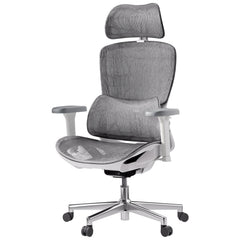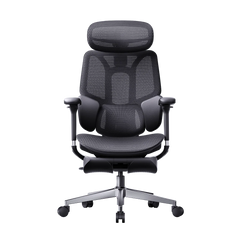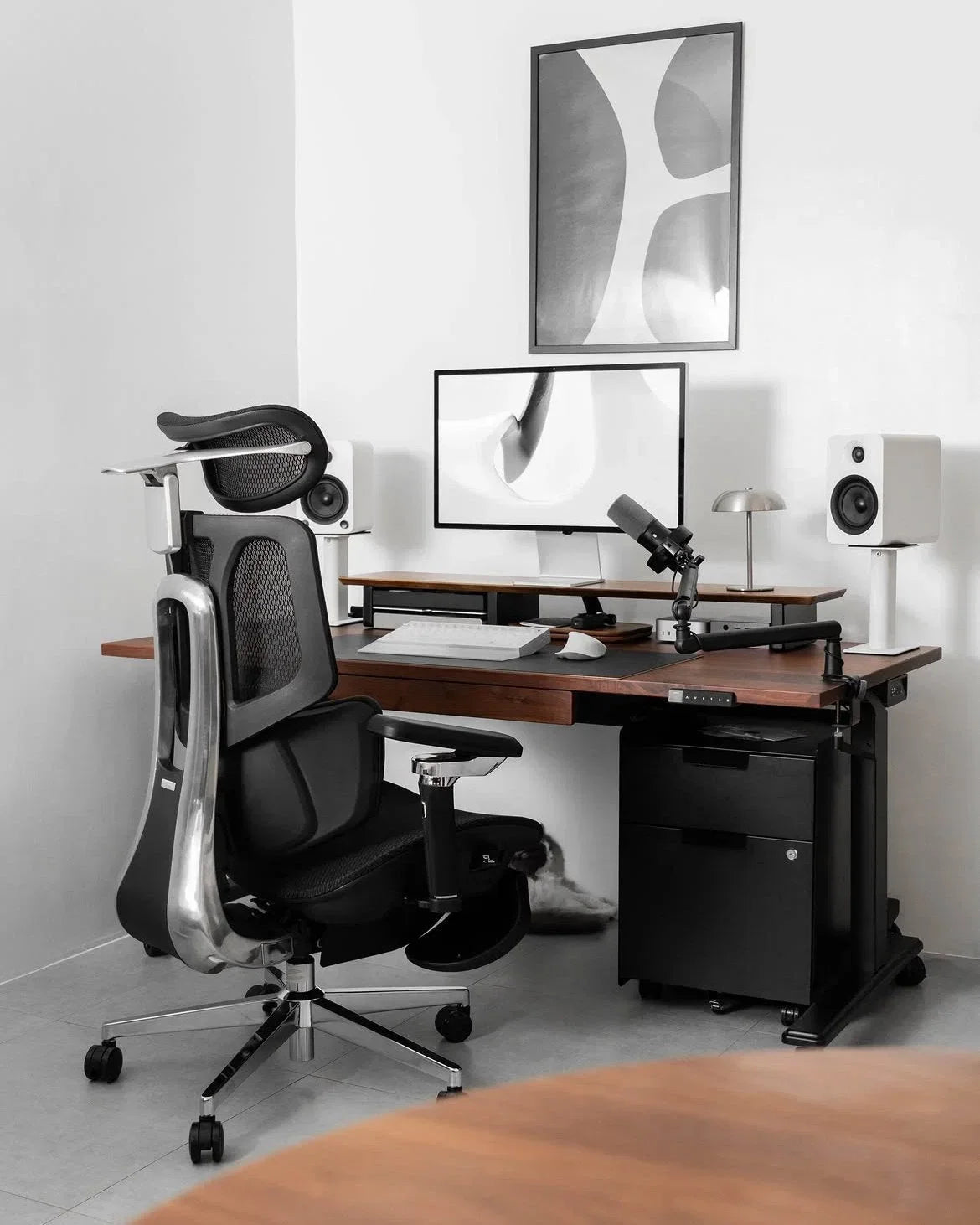






TheGamer's Coverage of the HBADA E3: Why It's Worth Paying Attention To
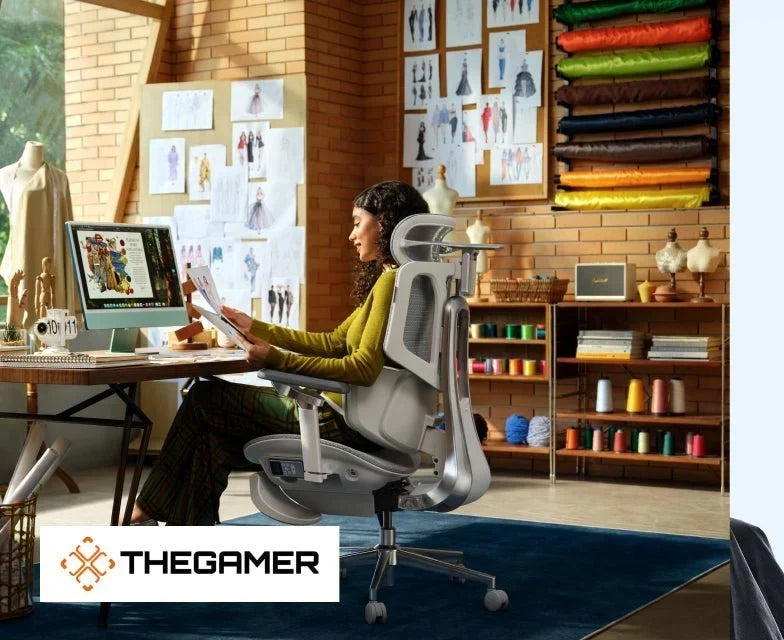
TheGamer isn't an obvious place to look for ergonomic chair coverage.
It's one of the largest gaming publications in the world, and its audience spends more time thinking about frame rates than lumbar curves.
But that's exactly what makes Josh Coulson's feature on the HBADA E3 worth paying attention to.
Coulson is an editor who has been with TheGamer since 2018 and has covered affiliate product work for years.
That work includes exclusive brand partnerships with Pokemon, Funko, and Baldur's Gate 3.
He knows when something is worth recommending and when it isn't.
His take on the HBADA E3 was direct:
For anyone sitting eight or more hours a day, it might be "perhaps the ultimate in office chair technology."
That's a strong claim from someone who isn't writing about ergonomics for a living.
Here's what he found — and what real users who sit in that chair every day say about it.
The Angle TheGamer Took — and Why It's Different
Most ergonomic chair coverage tends to focus on prevention.
Good posture now means fewer problems later.
That's a good argument, but it doesn't apply to someone who already has a problem.

The Three Key Features TheGamer Focused On
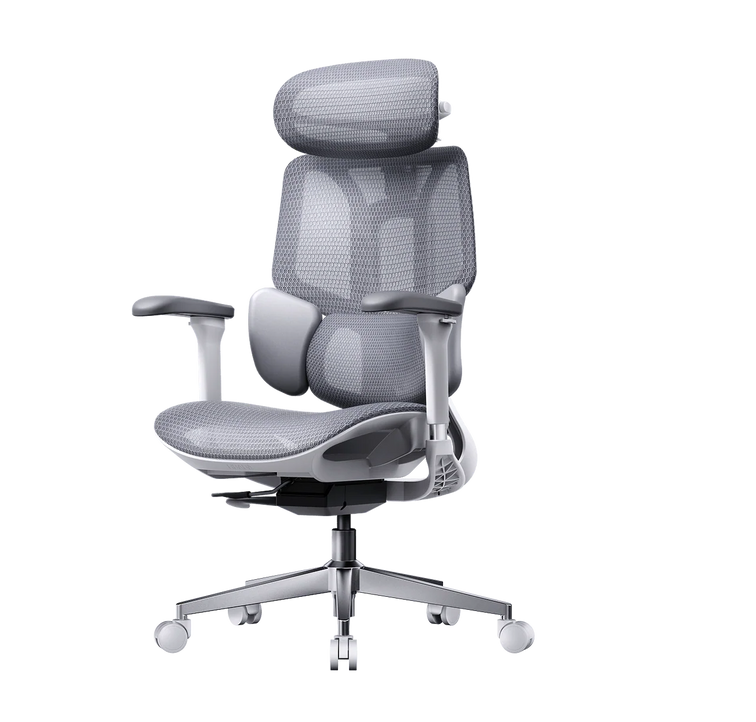
The Three-Zone Elastic Lumbar System
Most ergonomic chair coverage tends to focus on prevention.
Good posture now means fewer problems later.
That's a good argument, but it doesn't apply to someone who already has a problem.
Coulson pointed out that the HBADA E3 adopts a different principle.
Instead of positioning itself as a solution to future pain, the chair attempted to solve current pain in three areas most surprisingly hurt by sitting for long hours.
These areas are:
- Lower back
- Neck and shoulders
- Arms and forearms when typing
These are the areas where long-hour sitters feel it most.
HBADA refers to these as the “pain points.”
And the E3's three primary features correspond directly to each pain point.
That's not an accidental alignment.
The chair was created in partnership with Dr. Dennis Miller from the American ICA Chiropractic Association.
This came after research revealed that the majority of ergonomic chairs were addressing the wrong type of issue.
Prevention marketing is more straightforward.
Real relief is tougher to develop.
That differentiation is important because it determines who the chair actually targets.
If your back is fine and you just want to keep it that way, there are less expensive models that will do fine.
If you end your work day with a stiff neck or aching lower back that never quite goes away during the night, then the HBADA E3 was built for you specifically.
The Three Features Coulson Focused On
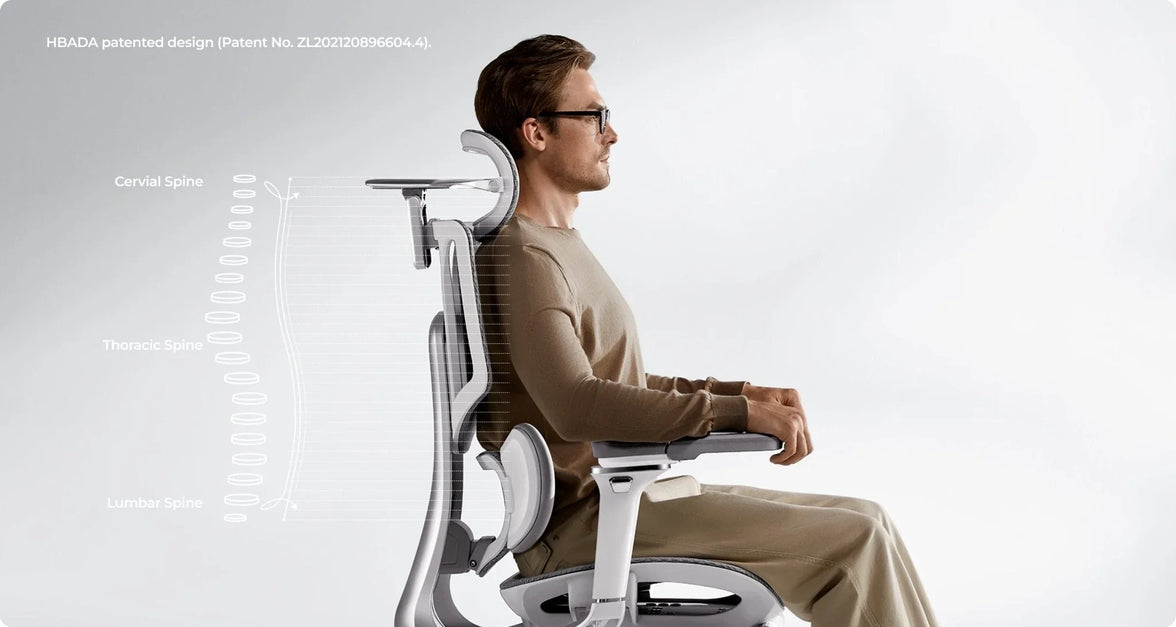
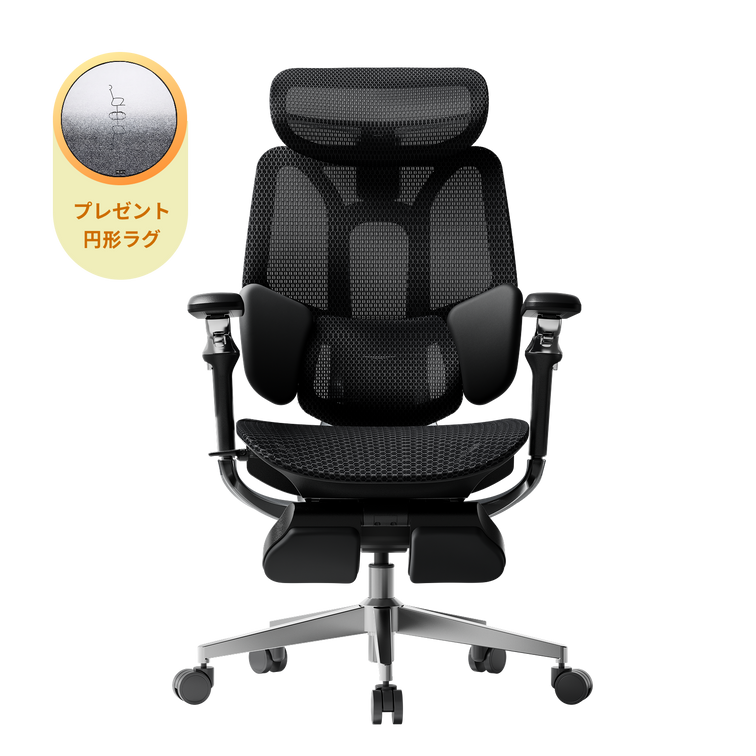
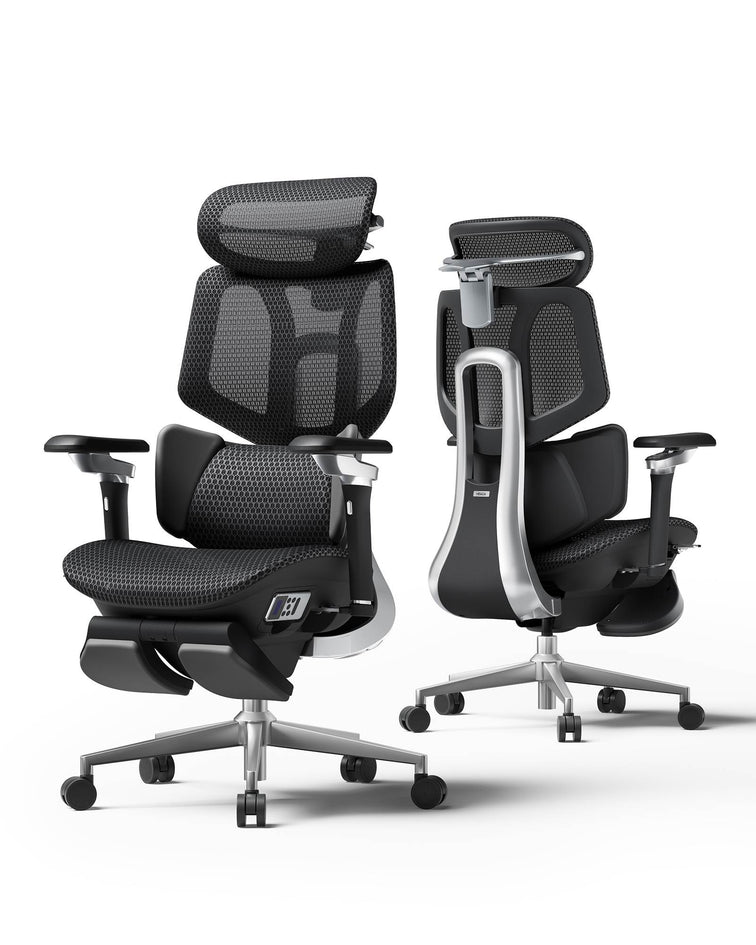
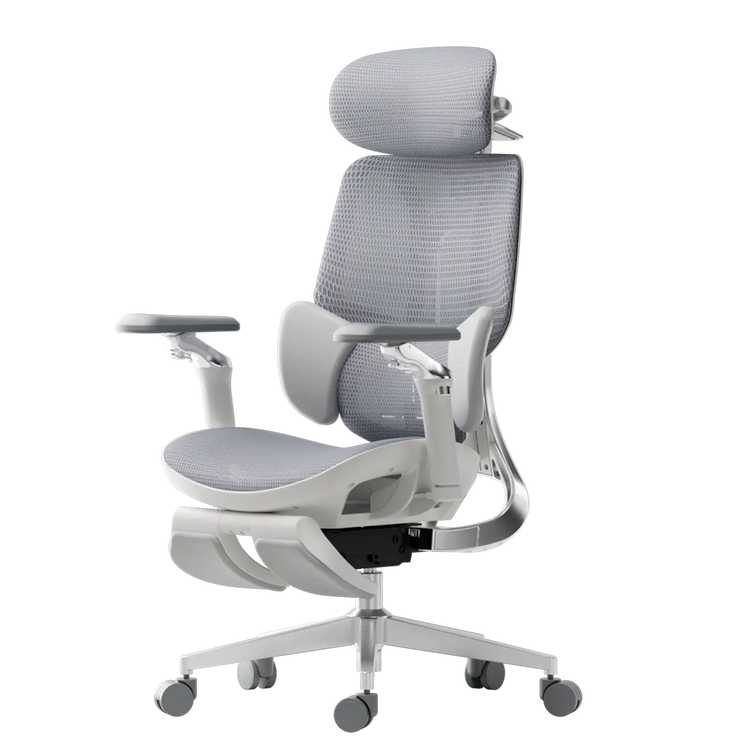
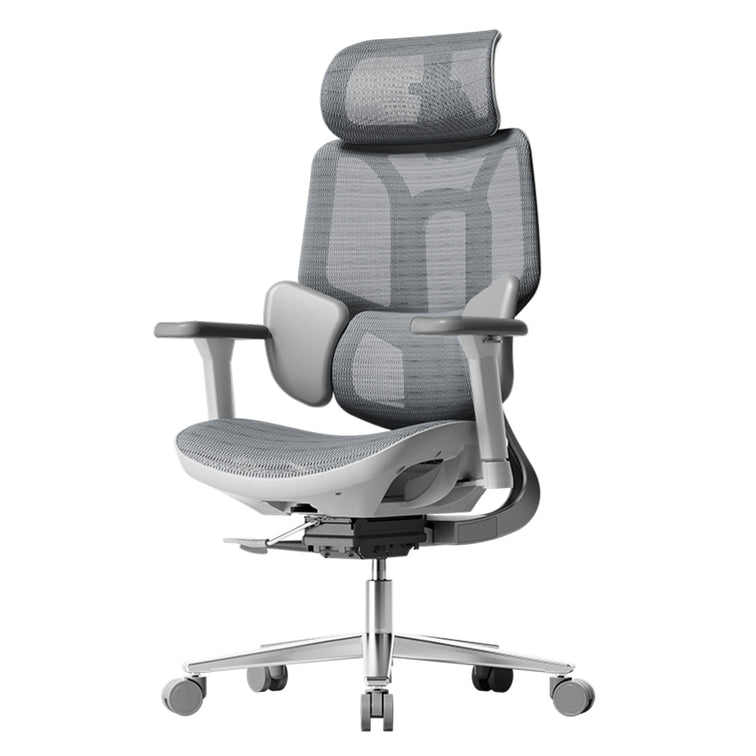
The Three-Zone Elastic Lumbar System
The rest of the E3’s design is centred around the lumbar support.
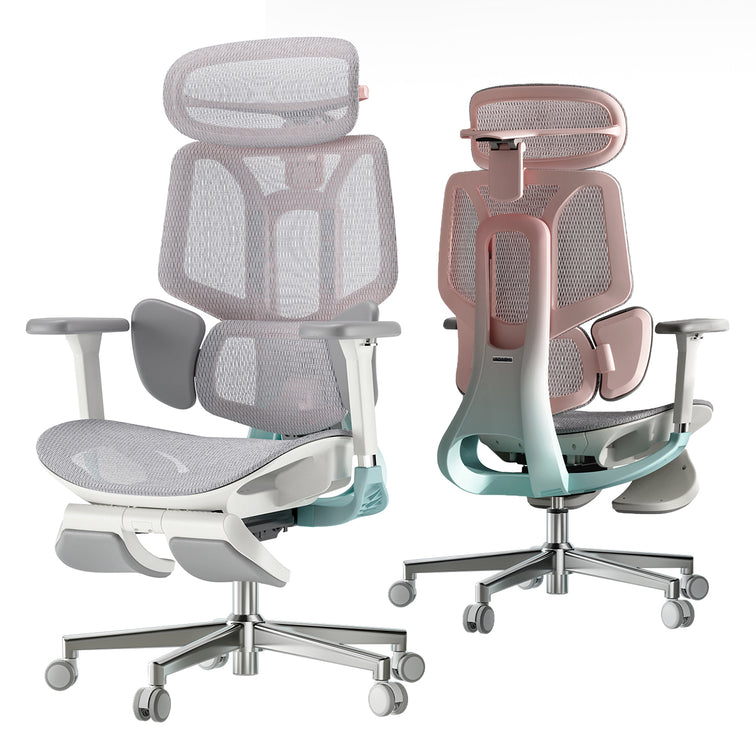
Instead of a single pad that supports one point on the spine, the three-zone system consists of:
- A central mesh layer
- Two adaptive side wings
These work together as a single system.
It treats the lower back with focused, customizable pressure along a larger surface area.
Coulson put this in the context of existing back pain, not just that of elderly building occupants.
The difference is one of engineering.
A pain-prevention chair can be static, because it's adding a positive element to a neutral baseline.
A chair that is meant to help relieve pain, on the other hand, must somehow take the strain off muscles that are already overexerted.
To do that, the support has to be responsive rather than static.
The three-zone configuration supports not only the centre line of the spine, but also the muscles to each side:
- Erector spinae
- Quadratus lumborum
Both are supported directly.
These are the deep muscles that stabilize your pelvis and lower back, and are the primary contributor to the build up of chronic tension across extended periods of sitting.
The 6D Mechanical Armrests
Coulson flagged these as a standout feature.
They are genuinely difficult to find at this price in the ergonomic chair market.
Most chairs offer:
- 2D armrests (height only)
- 4D armrests (height, width, depth, and pivot)
These are the standard options.
The E3's 6D system adds:
- Rotation
- Tilt-sync
These complete the full 6D range.
The tilt-sync element is what separates these from most competitors.
When you recline, the armrests follow the angle of the backrest.
Your arms stay supported rather than hanging in mid-air.
This matters for anyone who reclines regularly during video calls or reading.
It removes the postural compensation that happens unconsciously when arm support disappears mid-session.
For typing and mouse use, the full 6D range means the armrests can be positioned to genuinely distribute forearm pressure rather than just providing a surface that's approximately right.
The difference between "approximately right" and "exactly right" armrest position is the difference between shoulders that stay relaxed and shoulders that quietly tighten across an afternoon.
The 4D Headrest
What Coulson highlighted here is the chain of support — something that most headrest coverage misses entirely.
A headrest that only cushions the head is a comfort feature.
A headrest designed to distribute pressure down through the neck, into the shoulders, and reportedly as far as the lower back is a structural feature.
The HBADA E3's headrest uses two adjustments:
- Height
- Forward/backward tilt
Together, they make up its dual-axis adjustment.
This allows it to sit at the precise angle where it's actively supporting the cervical spine rather than just being within reach of it.
When the headrest is positioned correctly, the neck muscles can fully disengage during rest.
When it's positioned incorrectly — which is true of most chairs — it creates a contact point the neck instinctively resists, adding tension rather than removing it.
The Medical Collaboration Behind the Design

The Medical Collaboration Behind the Design
Coulson devoted significant space to the development story.
Particularly notable was the participation of Dr. Dennis Miller of the American ICA Chiropractic Association.
The HBADA E3 was created in cooperation with Dr. Miller and an international product design team.
Coulson presents this collaboration as the reason the chair treats pain you have now rather than just saying it can prevent pain in the future.
What came out of the collaboration was verified independently through testing with the German IGR Ergonomics Certification.
The IGR standard of certification is not a theoretical design principle.
It is a measurable and testable standard that will require a chair to provide demonstrable evidence that it supports the natural S-shape curve of the spine when a user is sitting for an extended period of time.
The HBADA E3 also won:
- The French Design Award
- The London Design Award
These awards celebrate both the engineering and the visual approach.
The AUTO Gravity-Sensing Chassis
One feature Coulson highlighted that doesn't get enough attention in most reviews: the auto gravity-sensing recline.
The chassis reads your body weight and automatically calibrates the tilt resistance.
The chair reclines proportionally to your size without manual adjustment.
This matters more than it sounds.
Manual tilt tension is one of the most frequently ignored adjustments on ergonomic chairs.
This means most people are either:
- Fighting against recline resistance that's set too high for their weight
- Free-falling backward in a chair that's set too light
These are common problems.
Both create posture compensation patterns that accumulate across a workday.
The auto system removes the variable entirely.
Real User Experiences: What Long-Hour Sitters Actually Found

Real User Experiences: What Long-Hour Sitters Actually Found
Beyond Coulson's coverage, the HBADA E3 has built a pattern of real-world feedback from the audience it was built for.
These are people sitting six to ten hours a day, often with existing back or neck issues.
Here is what several users reported after extended use.
Marcus, 34
Software Developer, Remote Worker
Daily sitting: 9–10 hours
Prior issue: Chronic lower back tension
Marcus had been through three different chairs in four years.
Two were "budget ergonomic" models that failed within 18 months.
The third was a mid-range option that was comfortable for the first two hours and progressively worse after that.
His primary complaint was always the same:
By 3pm, the lower back tension that started as mild discomfort had become the dominant thing in his awareness.
After six weeks with the HBADA E3, his report was specific rather than general:
"The afternoon wall is just gone. I'm not suddenly pain-free at the end of the day, but I'm not spending the last three hours of work fighting my own back."
He attributed it primarily to the three-zone lumbar — specifically the side wings.
He described them as the first time a chair had ever felt like it was actually holding his lower back rather than just touching it.
The 6D armrests were a secondary revelation:
"I didn't realise how much micro-tension I was carrying in my shoulders until it stopped."
Sarah, 29
UX Designer, Hybrid Office/Remote
Daily sitting: 7–8 hours
Prior issue: Neck and upper shoulder pain from screen work
Sarah's problem was textbook tech neck.
This is the forward head posture that develops from hours of screen work and manifests as chronic tension at the base of the skull and across the upper trapezius.
She had tried the standard ergonomic checklist:
- Desk height adjustment
- Monitor height adjustment
She had tried every adjustment on the list.
But there was one variable she hadn't addressed.
The chair.
Her experience with the HBADA E3's headrest was what she focused on:
"It took me about a week to get the angle right — it's more sensitive than I expected. But once it was positioned correctly, I noticed within a few days that I wasn't clenching my neck the same way."
After two months, she described the upper shoulder tension as "dramatically reduced" compared to her previous chair.
She also noted the tilt-sync armrests:
"I didn't know I needed armrests that followed the chair when I reclined until I had them. Now I can't imagine going back."
David, 42
Financial Analyst and Part-Time Gamer
Daily sitting: 8+ hours work, 2–3 hours gaming
Prior issue: Hip and lower back stiffness
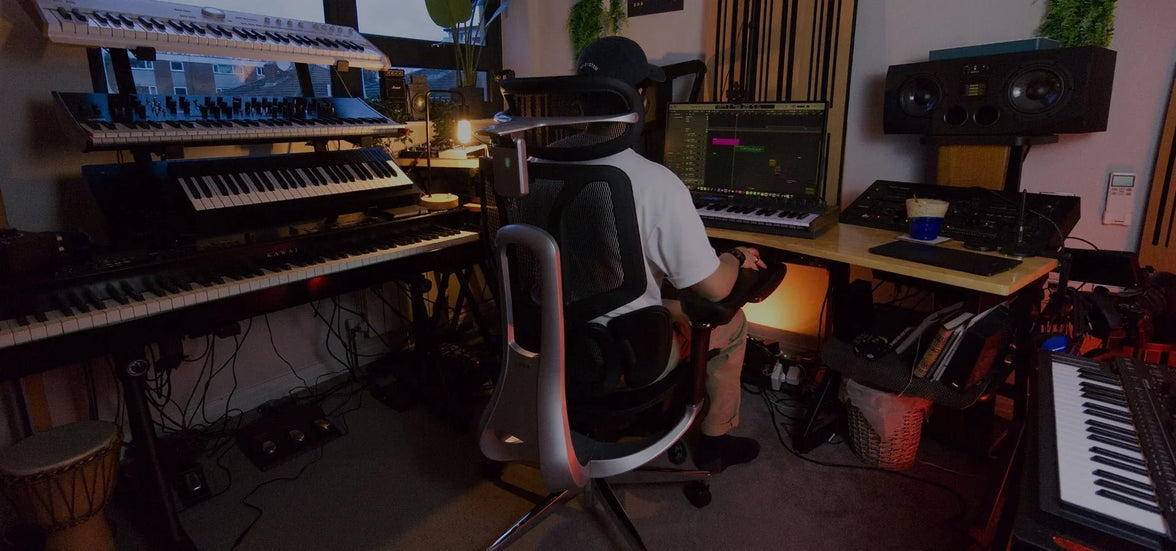
David's situation is the one TheGamer's audience would recognise most directly.
A workday in a chair that flows directly into evening gaming sessions in the same chair.
He had been using a gaming chair for both.
The padding-forward design that worked for gaming was causing real problems during sustained desk work.
The transition to the HBADA E3 involved an adjustment period:
"The first week felt weird. It's a completely different sitting geometry than a gaming chair and my body had to relearn something."
By week three, the hip stiffness that had been his consistent end-of-day complaint had significantly reduced.
By week six, it was largely absent.
His assessment of the dual-use question:
"It handles both. The armrest range on the 6D is genuinely useful for controllers — you can get them at an angle that gaming chairs actually struggle with. And the recline for movies is solid. It's not the immersive lean-back experience of a dedicated gaming chair, but it's a real recline, not a gesture."
Priya, 31
Content Manager, Full-Time Remote
Daily sitting: 6–8 hours
Prior issue: Lower back pain diagnosed as mild lumbar strain
Priya had a formal diagnosis — mild lumbar muscle strain from prolonged sitting.
She had been advised by her GP to pay attention to her workstation setup.
She'd already tried:
- The standing desk
- The lumbar pillow
- The physio exercises
Each of these was already in place.
The chair was the last variable.
Her experience was the most detailed on the setup process:
"The headrest took me longer to figure out than anything else. I'm 5'4" and the default position wasn't right for my height. Once I adjusted both the height and the tilt angle, the difference was noticeable within a day or two."
After three months, she described the lower back pain this way:
"Managed rather than resolved — but managed by the chair rather than by me consciously thinking about posture all day, which is what I was doing before."
She singled out the auto gravity-sensing chassis:
"I didn't realise how much I'd been fighting the recline on my old chair until I stopped having to."
What All Four Users Had in Common
Looking across these experiences, three patterns repeat consistently.
First: The Adjustment Period Is Real
Every user described a week or two of unfamiliarity.
The E3 sits differently from a conventional chair or a gaming chair, and the body takes time to accept the new geometry.
Users who expected immediate relief were sometimes initially disappointed.
Users who gave it two to three weeks were consistently positive.
Second: The Lumbar Side Wings Made the Biggest Difference
The side wings on the lumbar system were the feature that appeared most often in genuine "this is what made the difference" statements.
The three-zone design is the engineering story.
The floating side wings are what users actually noticed.
Third: The 6D Armrests Changed Something for Almost Everyone
The 6D armrests changed something even for users who hadn't identified arm or shoulder tension as their primary issue.
The tilt-sync in particular was the feature most people didn't know they needed until they had it.
Frequently Asked Questions (FAQ)
Is the HBADA E3 good for people who already have back pain?
Yes.
This is a deliberate design priority, not an incidental benefit.
The chair was developed alongside Dr. Dennis Miller of the American ICA Chiropractic Association for the areas where prolonged sitting causes the most consistent damage:
- Lower back
- Neck
- Forearms
Its goal is specifically to address pre-existing pain in these areas.
The three-zone elastic lumbar, 6D armrests, and 4D headrest each target one of these areas directly.
This goes beyond generalised comfort improvements.
How long does it take to feel a difference?
Based on user experience, most people begin to notice a meaningful reduction in end-of-day tension within two to three weeks of consistent use.
The first week often involves an adjustment period.
The E3's sitting geometry is different from conventional chairs, and the body takes time to accept it.
Users who pushed through the initial unfamiliarity consistently reported positive outcomes.
What makes the 6D armrests different from standard armrests?
Standard ergonomic chairs typically offer:
- 2D (height only)
- 4D (height, width, depth, pivot)
These are the usual armrest options.
The E3's 6D system adds:
- Rotation
- Tilt-sync
These complete the full 6D range.
The tilt-sync means the armrests follow the angle of the backrest when you recline, keeping your arms supported rather than leaving them hanging.
The rotation allows the pad angle to match your natural forearm position during typing.
Together, these two additions mean the armrests actively distribute arm and shoulder pressure rather than simply providing a surface to rest on.
Is the HBADA E3 suitable for gaming as well as office work?
Yes.
TheGamer's coverage specifically noted the armrest design as dual-purpose.
It supports keyboard and mouse use during focused work, and provides elbow and forearm support in reclined positions during gaming.
User David's experience (above) confirms this for a full-day work-plus-evening-gaming pattern.
The recline is a genuine 140° with auto gravity-sensing chassis.
The armrest range on the 6D system accommodates controller grip angles that many gaming chairs actually handle less well than they claim.
What is German IGR certification and why does it matter?
IGR (Institut für Gesundheit und Ergonomie) is Germany's independent Institute for Health and Ergonomics.
IGR certification requires a chair to demonstrably maintain the spine's natural S-curve during sustained sitting, verified against measurable standards rather than design review.
It's one of the most respected third-party ergonomics certifications internationally.
The HBADA E3 holding IGR certification means its lumbar support has been independently verified to work as claimed — not self-assessed.
How does the AUTO gravity-sensing chassis work?
The system reads your body weight when you sit and automatically calibrates the recline resistance accordingly.
A user of about 63 kg and a user of about 100 kg will experience the same proportional recline effort.
Neither one needs to manually adjust tilt tension.
Who is the HBADA E3 not right for?
If you sit for fewer than four hours a day, the E3's engineering depth is more than you need.
A well-built chair in the $200–$300 range will serve you adequately.
If you want a deeply immersive gaming recline experience specifically, a dedicated gaming chair's bucket-seat design will feel more dramatic.
The E3 is built for the user who needs genuine ergonomic performance across a long workday — that specific use case is where it outperforms the alternatives at its price point.
Explore the HBADA E3 Ergonomic Chair →
This post references editorial coverage published by TheGamer on February 26, 2025, written by editor Josh Coulson.
All editorial opinions belong to TheGamer and Josh Coulson.
User experiences cited are composite accounts based on customer feedback and do not represent specific identifiable individuals.