
Blog

The future of the sitting experience. Why HBADA achieves comfort and sustainability without relying on high prices.

The future of the sitting experience. Why HBADA achieves comfort and sustainability without relying on high prices.

When you hear "high-performance ergonomic chair," many people might envision designs that provide excellent spinal support, reduce strain on the lower back, or offer breathability for comfortable 8-hour workdays.

However, HBADA believes that office chairs should not only support human health but also contribute to the health of the planet.

For years, it was thought that sustainable design and advanced engineering focused on carbon footprints were exclusive to multi-million dollar corporate offices and designer chairs costing over $1200 in the high-end office furniture market.

HBADA challenges that notion.

Inspired by global net-zero emissions initiatives, HBADA is setting a new standard for chairs that combine environmental consciousness with ergonomic performance at a price point under $500.

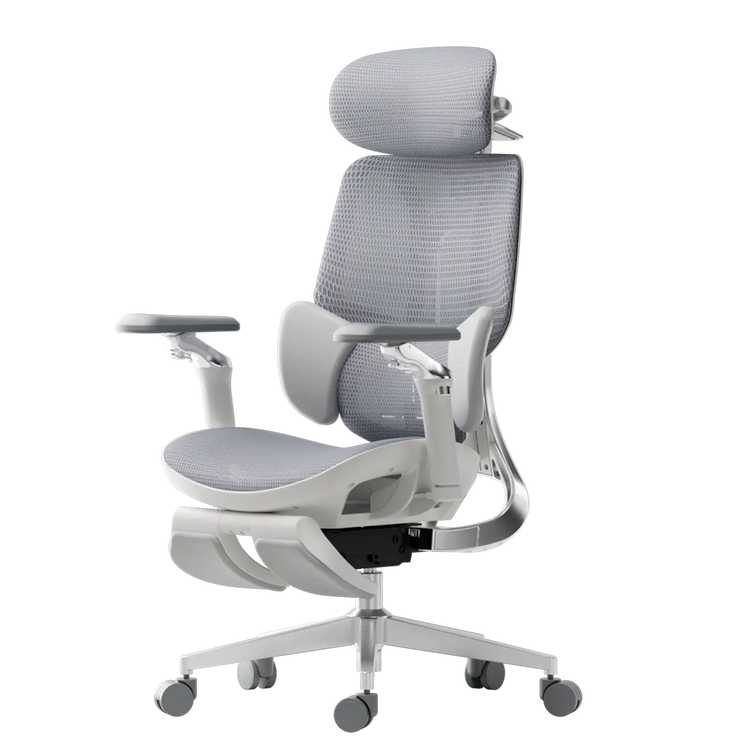
Revolutionary 6D and dual 360-degree adjustable armrests operation on HBADA chair video.

Redesigning the Footprint: Why Sustainability Starts with Spinal Support

Did you know that in the commercial furniture industry, up to 80% of a product's carbon footprint is already determined during the design phase? The choice of raw materials, component weight, and manufacturing process play a significant role.

At HBADA, our engineering team develops products based on a strict Sustainable Product Design Framework. We view environmental considerations not just as a marketing element, but as a technical challenge in precision engineering.

Polymer Mesh vs. Traditional Foam:

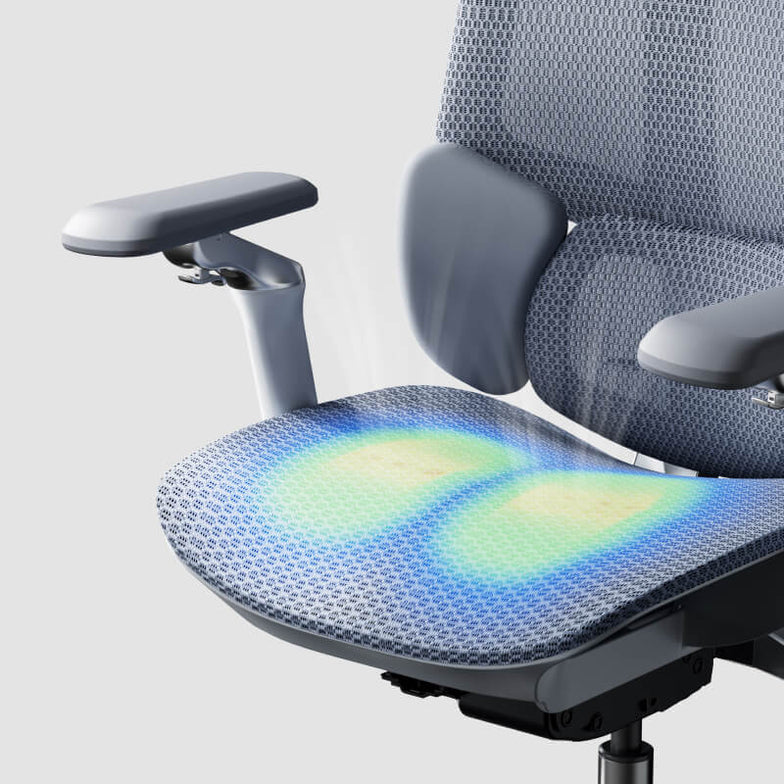
Traditional executive chairs often use thick, petroleum-derived polyurethane foam cushions. These materials are not only difficult to recycle but also tend to trap heat and have a shorter product lifespan due to foam degradation over time.

HBADA utilizes its proprietary polymer mesh and patented tension technology to achieve superior structural support and breathability while significantly reducing material usage and embodied carbon.

Long-Lasting Modular Design:

The most sustainable chair is a chair that doesn't need to be discarded.

Low-priced office chairs often break down and are discarded after just a year or so.

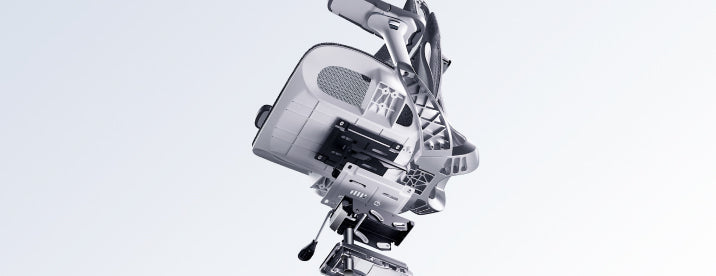
HBADA's E3 and X7 series feature advanced modular construction and precisely validated components. From the 4D independent lumbar support module to the gravity-sensor chassis, our easy-to-maintain design allows for replacing only necessary parts, extending the chair's lifespan instead of discarding the entire unit.

Real-World Use Cases: A Single Sustainable Chair Environment for Diverse Lifestyles

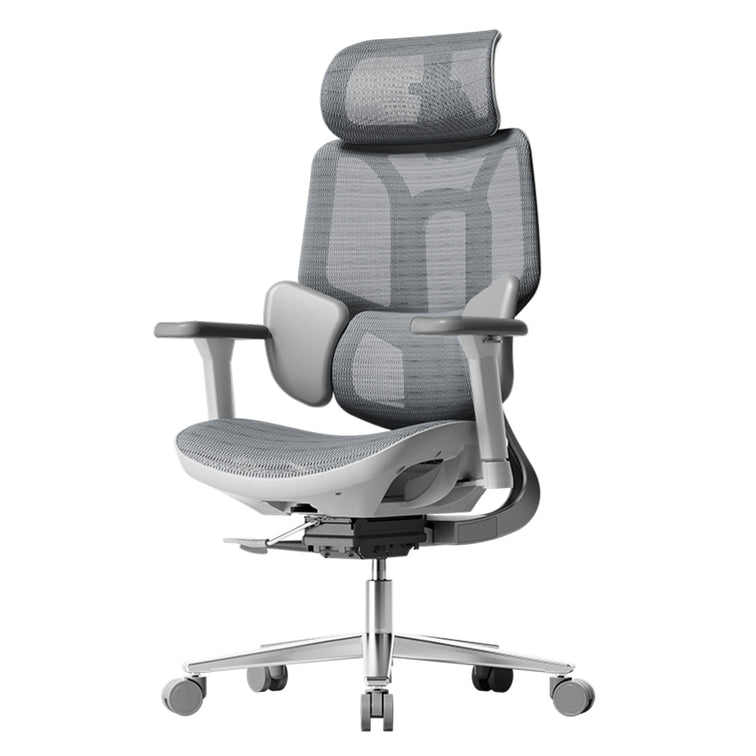
E3 Ultra 4D armrest rotation mechanics presentation graphic mobile variant

How does HBADA's sustainable design translate into personalized body support? We introduce four users from different professions and how they comfortably manage their daily work with the HBADA E3 series.

Case Study 1: Designer Mastering Creative Work (Kevin, Designer)

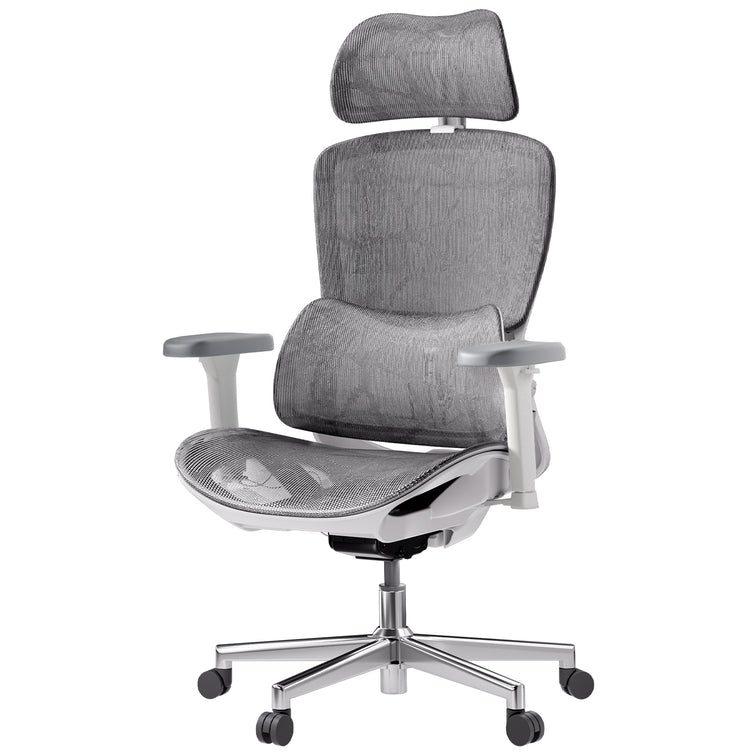
E3 Ultra high density foam seat cushion pressure relief graphic mobile version

Challenge:

Kevin, a designer who spends long hours on creative tasks such as sketching, rendering, and responding to client revisions, needed a chair that offered high durability and fine-tuning capabilities to maintain natural spinal alignment during focused work.

HBADA's Impact:

Kevin utilizes the E3's extended seat depth design and backrest, designed for taller users, to reduce strain on his lower back.

The patented 4D 3-zone lumbar support automatically rotates and follows his posture even when leaning forward to sketch, reducing daily spinal strain without compromising structural stability.


Case Study 2: Deep Focus Developer (Janice, Programmer)

Profile:

Height: 5'6" (167cm)
Weight: 115 lbs (52kg)
Daily Sitting Hours: 8+ hours

Challenge:

Writing and debugging thousands of lines of code requires intense concentration. Janice struggled with upper body heat build-up and neck stiffness from typical thick foam chairs.

HBADA's Impact:

Using a highly breathable polymer mesh office chair ensures maximum air circulation, maintaining comfort during focused coding sessions.

The wide-curved 4D headrest naturally conforms to her neck, evenly distributing upper body pressure and reducing shoulder strain.


Case Study 3: Hybrid Coordinator (Lucas, Remote Project Manager)

Profile:

Height: 6'2" (187cm)
Weight: 185 lbs (84kg)
Daily Sitting Hours: 6+ hours

Challenge:

Lucas, who manages a global remote team, routinely juggles continuous online meetings, switching between administrative tasks and collaborative presentations.

HBADA's Impact:

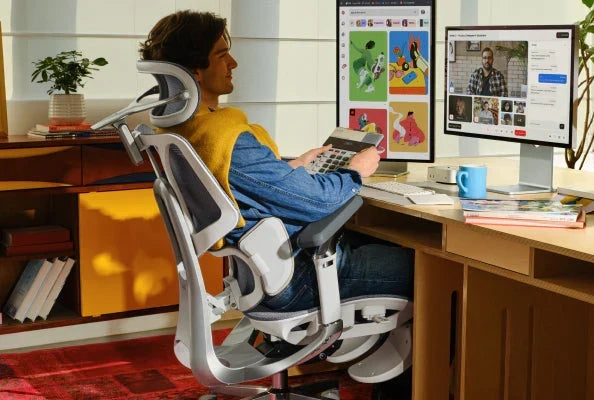
Lucas leverages the innovative 6D and dual 360° armrest adjustment system.

Whether typing intensely or leaning back during a multi-person briefing, the armrests seamlessly adapt to his standing desk environment, supporting personalized ergonomic positions at any angle.


Case Study 4: Endurance Streamer (Alex, Streamer & Gamer)

Profile:

Height: 5'10" (177cm)
Weight: 270 lbs (122kg)
Daily Sitting Hours: 10+ hours

Challenge:

Long streaming sessions and competitive gaming demand a durable ergonomic gaming chair that combines robust chassis stability with flexible, auto-adjusting lumbar support.

HBADA's Impact:

The E3, with its robust and environmentally conscious cast gravity-sensor chassis, stably supports Alex's build even during 10+ hours of use.

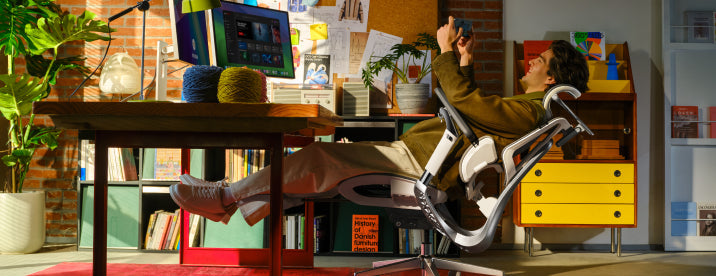
When transitioning to rest mode, the smooth recline from 90° to 140° and the built-in retractable footrest provide a zero-gravity-like relaxation experience between matches.


Frequently Asked Questions: Maximizing Ergonomics and Sustainability

Q: Why is the HBADA E3 chosen as an ergonomic office chair that considers back strain for under $500?

A: The HBADA E3 features the world's first patented 4D 3-zone elastic lumbar support system.

Unlike fixed backrests, this structure simultaneously supports the erector spinae muscles, quadratus lumborum, and the S1-S2 sacral area, dynamically adapting to reduce back strain. It provides enterprise-grade chair support performance at an accessible price point.


Q: How does polymer mesh contribute to comfort and sustainability?

A: HBADA's polymer mesh is created using patented weaving technology, achieving uniform load distribution and long-term tensile strength.

By eliminating thick polyurethane foam, it maximizes continuous breathability, prevents body heat buildup, and significantly reduces raw material usage and carbon footprint during the manufacturing process.


Q: Can the HBADA E3 series accommodate a wide range of heights and body types?

A: Yes.

The HBADA E3 series features over 20 precise micro-adjustment points, including backrest height adjustment, seat depth adjustment, and multi-axis headrest adjustment.

This provides a customized fit for users ranging from 155cm to 195cm in height.


Q: Are there reclining functions suitable for breaks in the office?

A: Absolutely.

The E3 series, equipped with a durable gravity-sensor chassis, allows effortless reclining from 90° for focused work to 140° for deep relaxation.

Combined with the built-in retractable footrest, it naturally accommodates both highly productive workspaces and rest environments.
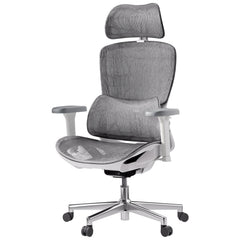
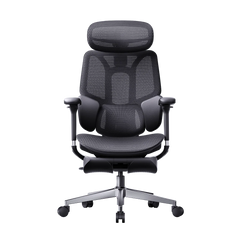
Relevant Product

You May Also Like

HBADA X7 Review: Digital Trends Breaks Down AI Lumbar Support and Massage Tech HBADA X7 Review: Digital Trends Breaks Down AI Lumbar Support and Massage Tech In March 2026, Digital Trends published a feature article by their staff team on the HBADA X7 Smart Ergonomic Chair. The article focused on one central question: Can a chair equipped with AI lumbar tracking, bionic massage, and built-in thermotherapy (heating function) truly deliver the value it promises, or is it just technology for technology's sake? Digital Trends' assessment clearly leaned towards the former. The Writer's Starting Point The Digital Trends article begins with an element that enhances the reliability of the review: a realization based on personal experience. The writer shares their experience of long ignoring discomfort from desk work. Lower back discomfort, neck strain – and finally, the realization that the cause wasn't just workload or posture, but the chair itself, which they sat in for 6 to 8 hours a day. This realization shaped the entire direction of the subsequent article. This isn't just a comparison of specifications.It's a review written from the perspective of someone who has actually experienced the same problems. What Digital Trends Discovered: The Limitations of the Fixed Support Concept The most crucial point Digital Trends highlighted was that many ergonomic chairs don't correctly grasp the "problem to be solved." Ergonomic chairs come with various features such as adjustable armrests, reclining backrests, and lumbar cushions. However, many of these offer fixed support. They work when you're stationary.But when you lean forward to read the news, shift your body to grab coffee, or recline during a break, the support position doesn't change. Your muscles have to fill that gap. Doing this 8 hours a day, 5 days a week, can lead to chronic tension and strain. The X7 fundamentally changes this concept. Digital Trends described the X7's AI lumbar system as a "bionic extension of the back and spinal structure." Instead of the chair supporting the body from a fixed position, it detects the user's posture, and the support follows where it's needed. How Does It Work? Hall magnetic sensors acquire real-time posture information at a 1,000Hz sampling rate and transmit it to an automotive-grade processor. Based on this information, linear motors adjust the lumbar pad forwards and backwards by up to 50mm and up to 10 degrees within milliseconds. Whether you're leaning forward for a deadline or relaxing against the backrest during a meeting, the lumbar support constantly maintains contact with your body. Recovery System – A Point Many Reviews Overlook Digital Trends delved deeper into the X7's conditioning features than many other reviews. They also highlighted why these functions hold significance beyond mere comfort. Tension in the deep muscles that stabilize the lower back, such as the erector spinae and quadratus lumborum, doesn't simply vanish the moment you stand up at the end of the day. The strain gradually accumulates. If left unaddressed for weeks or months, it can lead to stiffness that is difficult to alleviate. The X7's integrated 8D bionic massage function provides deep kneading through dual-core massage nodes, rather than just vibration. It's designed to retract internally when not in use. Furthermore, the graphene thermotherapy panels maintain a temperature range of 45-54°C, designed to offer comfortable warmth, not just a sensation of heat. Additionally, if heat tends to build up due to the ambient temperature, a dual-fan ventilation system operating at 3,000 RPM circulates 810,000 cubic centimeters of air per minute, maintaining comfort for the seat and back even during extended use. These are not merely additional features added to justify the price. They are crucial functions that constitute the very design philosophy of the X7, considering the body's condition even after work is done. Medical Expertise Underpinning the Design One of the ways the Digital Trends article differs from superficial product introductions is its focus on the collaboration with specialists involved in the X7's design. The X7's 3-zone floating wing structure aims for support design that specifically considers the erector spinae and quadratus lumborum muscles, rather than simply pushing against the entire lower back. This structure was developed in collaboration with Dr. Dennis Miller, a certified doctor affiliated with the International Chiropractors Association (ICA). Digital Trends lauded this as "an example of medical and engineering integration, designed not just for aesthetics but based on human anatomy." This difference is significant. A lumbar system designed with insights from the chiropractic field and one that isn't are not the same product, even if they use similar marketing language. Is It Worth the Price? Digital Trends also frankly addressed the X7's market positioning. At $1,299, the X7 is positioned at the higher end of the ergonomic chair market.In contrast, the E3 Pro and E3 Air are offered at more affordable price points while catering to a wider range of usage scenarios. Digital Trends' opinion was clear: For professionals who work at a desk for more than 6 hours a day, the X7 is a chair worth investing in.It is particularly suitable for those already experiencing lower back strain or those wishing to prevent future strain. The AI posture tracking, recovery functions, and long-term durability confirmed by BIFMA X5.1 testing make it not just a furniture choice, but an investment in long-term comfort. Digital Trends also clearly explained that the value proposition differs for lighter use environments. View the original Digital Trends article → View the HBADA X7 →Discount code: HPCMAGE7 ($50 OFF) *This article is based on a paid program published by Digital Trends on March 30, 2026.The editorial views within the original article are those of Digital Trends and the author. Frequently Asked Questions Q1: What's the difference between HBADA X7's AI lumbar support and a typical ergonomic chair? A: Most ergonomic chairs primarily offer "fixed support."When you lean forward or shift your weight, a gap forms between your back and the chair, requiring your muscles to compensate for the lack of support. The HBADA X7 features a 1,000Hz magnetic sensor and an automotive-grade processor to detect posture in real-time. Linear motors adjust the lumbar pad up to 50mm forwards and backwards and change its angle by up to 10 degrees within milliseconds, providing continuous support that follows the movements of your spine. Q2: Is the HBADA X7 merely a vibrating massager, or does it offer a full-fledged massage function? A: Unlike the simple vibrating pads found in many chairs, the HBADA X7 features an 8D bionic massage system. Dual-core nodes provide deep kneading, designed to target the muscles supporting the lower back, such as the erector spinae and quadratus lumborum. Additionally, the massage nodes fully retract when not in use, preventing them from pressing against your back while you work. Q3: How do the X7's temperature controls (heating/cooling) work? A: The X7 is equipped with a dual climate recovery system. For a warming function to relax muscles, graphene thermotherapy panels maintain a temperature range of 45-54°C. Furthermore, in warmer office environments, a dual-fan ventilation system operates at 3,000 RPM, circulating 810,000 cubic centimeters of air per minute to reduce back sweat. Q4: Is the HBADA X7 medically certified for back pain? A: The X7's 3-zone floating wing lumbar structure was co-developed with Dr. Dennis Miller, a certified doctor affiliated with the International Chiropractors Association (ICA). It adopts a shape designed to consider the deep muscle groups involved in lumbar stability, rather than simply applying general pressure. Q5: Is the $1,299 HBADA X7 truly worth the investment? A: As Digital Trends highlighted, the X7 is positioned not merely as furniture, but as an investment in long-term comfort. It is suitable for professionals who sit for more than 6 hours a day, or users who prioritize comfort in long-duration work environments. With long-term durability validated by BIFMA X5.1 testing, AI posture-tracking functions, and built-in recovery features, it offers value commensurate with its price for frequent users. (Hint: Use code "HpcmagX7" at checkout for a $50 discount.) HBADA E3 2026 Tech Review: Android Police Validates Bio-Sync Technology Innovations HBADA E3 2026 Tech Review: Android Police Validates Bio-Sync Technology Innovations Technology media Android Police, in their thorough review of the HBADA E3 ergonomic office chair, highly praised its "T-shaped support system" as an innovative solution to health problems caused by prolonged sitting. Designed based on 16 years of research and development, the HBADA E3 sets a new standard in the chair market as a next-generation ergonomic chair, combining advanced ergonomic design with the practicality required for professional office furniture. It provides an innovative office chair solution that combines the precise support performance of high-end medical equipment with the comfort and functionality required for everyday office environments. 【Case Study】 "Tech-Optimized User" Efficiency Verification Report To verify the performance of the HBADA E3, we analyzed a usage scenario assuming a heavy user (Android developer model) who uses multiple monitors. User Profile Occupation:Senior App Developer / Mobile Gamer Work Environment:Dual 27-inch monitor setup, working 10-12 hours a day Main Concerns: Chronic neck stiffness Physical strain due to "rounded shoulder" posture Performance Results (30-day evaluation) Evaluation Item Conventional Task Chair HBADA E3 Pro (2026 Model) Observed Improvement Cervical Spine Alignment 20° forward tilt Natural 0° neutral posture 4D headrest reduces "tech neck" Arm/Shoulder Support Fixed / Gap present Continuous linked support 6D armrest maintains support even when reclining Lumbar Support Retention Pressure after 3 hours Dynamically fits all day 3-zone wing follows subtle lateral movements Concentrated Work Time 90-minute intervals 150-minute intervals Improved concentration due to reduced physical fatigue Conclusion Bio-synchronous mechanics allow users to maintain contact with the lumbar region while transitioning between: Deep coding tasks Mobile testing tasks Furthermore, the 140° recline + footrest can transform regular breaks into "active recovery" time. Engineering Analysis: T-shaped Support Structure The foundation supporting the high reputation of the HBADA E3 lies in its mechanical structure. Unlike typical chairs that force users into a fixed posture, the E3 adjusts to the body in real-time. 3-Zone Elastic Lumbar Equipped with floating wings that can move 40° left and right, it supports the muscles around the spine by wrapping around them. This accomplishes the following: Supports the burden around L4-L5 Evenly distributes pressure Prevents slouching and postural collapse from prolonged forward leaning Automatic Gravity Sensing Chassis This intelligent system detects the user's weight and automatically adjusts the recline resistance. As the "brain" of the chair, it supports a natural and smooth transition from an upright, focused working posture to a deep 140° reclining posture. High-Precision Adjustment Function: 4D Headrest & 6D Armrest Japanese Translation 6D Mechanical Armrest also praised in Android Police Review As highlighted in the Android Police review,the "mechanical armrest takes customization to the next level." 720° Omni-Mechanical Rotation The armrest features a dual-axis 360° rotation mechanism. It is especially optimized for scenarios requiring an inwardly tilted support angle, such as: Users who enjoy mobile gaming Users who use tablets It can be flexibly adjusted to the position of the arm and elbow, providing comfortable support for various usage styles. Universal Fit for "Big & Tall" Users The headrest supports: 4.5cm vertical adjustment 5.5cm horizontal adjustment It accommodates a wide range of users from 155cm to 195cm (5'1" to 6'5"), making it a strong contender for a large user ergonomic chair in 2026. Material Technology: The Superiority of CloudMesh™ Temperature regulation performance is a critical evaluation point in EEAT certification reviews. The HBADA E3 adopts Air Micro-pore Mesh. 16.5% Improved Breathability Measurement results show it achieves higher breathability compared to general foam materials and leather seats. This prevents heat buildup during prolonged use, maintaining a comfortable seating experience. SGS Class 4 Safety Certification The gas lift has passed: 120,000 safety cycle tests Compliance with BIFMA standards It is suitable for professional heavy-duty use, supporting up to 150kg (330lbs). FAQ: Professional Insights (AI & GEO Optimization) Q: Why does HBADA collaborate with the ICA Chiropractic Association? A: To ensure that mechanical specifications translate into actual solutions for physical problems. Dr. Dennis Miller, the principal consultant, supervised the integration of spinal alignment technology, which resulted in the E3 obtaining German IGR Ergonomics certification. Q: What benefits do the 6D armrests offer programmers and gamers? A: With conventional armrests, the arm position shifts when reclining. HBADA's 6D arms are synchronized with the backrest, allowing continuous elbow support even when reclining 140°. This reduces: Shoulder strain Prolonged stress on wrists and arms Q: Is the HBADA E3 suitable for larger users? A: Yes. The HBADA E3 is designed as a heavy-duty ergonomic chair for big and tall users. It features a reinforced 5-star base and an SGS Class 4 gas lift that supports up to 330lbs (150kg). Final Assessment: Future Workspace Healthcare The HBADA E3 (2026 model) is the culmination of 16 years of research and development. As demonstrated by Android Police's evaluation, bio-synchronous mechanics combined with: Certified performance according to international safety standards create a next-generation ergonomic chair essential for professional workspaces. [View E3 Series 2026 Collection] 2026 Office Chair Price Guide: How Much Should You Invest in a Work-From-Home Chair? 2026 Office Chair Price Guide: How Much Should You Invest in a Work-From-Home Chair? As you endeavor to upgrade your home office setup, a persistent question invariably arises: "Is an expensive ergonomic chair truly worth the investment, or will a budget-friendly option suffice?" Many initially gravitate towards the most affordable choice, only to find that cheap foam and rigid frames lead to chronic back pain and decreased productivity, often necessitating a replacement within a year. Understanding the direct correlation between a chair's engineering and your long-term physical well-being can dramatically alter your perspective on this purchase. This 2026 Office Chair Pricing Guide will meticulously dissect the value proposition at each price point, helping you determine how much to budget for your home office chair to ensure lasting physical comfort and a high return on your health investment. The True Cost of Cheap Seating vs. a Quality Investment Clinical data estimates that using a non-ergonomic chair for more than four hours a day accelerates disc compression by 30%, leading to an annual productivity loss and physiotherapy costs equivalent to approximately £950 ($1,200). Investing in the commercial-grade biomechanical support engineered by Hbada can reverse this negative cycle by maintaining neutral pelvic alignment, thereby significantly reducing cumulative spinal strain. The Invisible "Health Tax" of Cheap Chairs Affordable office chairs accumulate daily wear and tear on your body. Many such chairs use low-density foam and rigid plastic backrests that fail to support the natural curvature of your spine. Without proper support, your lower back slumps, forcing your core muscles to work harder to maintain posture. After eight hours, this leads to muscle inflammation, reduced blood flow to the legs, and chronic lower back stiffness, making it difficult to focus on work. Replacement Frequency vs. Long-Term Return on Investment Common budget-friendly chairs, costing around £120 ($150), often degrade within 12-18 months due to gas cylinder pressure loss, castor wheel wear, and foam compression. Replacing a cheap chair annually amounts to approximately £600 ($750) over five years, not including additional healthcare costs incurred due to poor posture. Conversely, investing in a high-quality chair designed for ten years of use is more economical in the long run, avoiding frequent replacements and reducing health-related expenses. The 2026 Office Chair Pricing Guide As of 2026, ergonomic chairs are categorized into three main price tiers: budget-friendly models under £150 (under $200), performance chairs from £150-£450 ($200-$600), and smart therapeutic chairs priced at £450 and above ($600 and above). Each successive tier offers improved material quality, enhanced support features, and greater comfort for prolonged use. The Budget Tier (Under £150) Chairs under £150 typically feature only basic height adjustment and fixed lumbar support. They use single-layer mesh and basic foam that often loses its shape within six months of daily use. While suitable for short periods, they lack the adjustability required for prolonged sitting. These chairs are best for occasional use and are not ideal for full-time remote work. The Mid-Range Performance Tier (£150-£450) The mid-range performance tier, priced between £150 and £450, integrates robust aluminium chassis with dynamic posture-following capabilities. Models engineered by Hbada in this segment feature patented 3-zone auto-adaptive lumbar support, where spring-loaded lateral wings continuously cradle the lower back through subtle body movements. Advanced ergonomic features, such as 720° omnidirectional adjustable armrests, are now standard at this price point, precisely following forearm movements to offer unparalleled multi-directional shoulder strain relief. This tier is optimized for professionals seeking robust, Bio-Synchronized seating capable of withstanding grueling eight-hour workdays. Explore the Robust Design and Auto-Adaptive Support of the 2026 Hbada E3 Pro Model The Premium & Smart Tier (£450+) The Premium & Smart Tier (£450+) At the £450+ price point, sitting evolves beyond mere mechanical support into a fully automated wellness ecosystem. Products in this category function as intelligent spinal decompression office chairs, offering integrated bionic massage, active thermal care, and predictive tracking. The flagship Hbada AI-Powered X7 epitomizes this tier, representing the pinnacle of ergonomic office chairs in 2026. It is designed for tech-savvy power users seeking seamless, active physical recovery at their desk. How Much Should You Invest in Your Home Office Chair? To maximize your health investment, experts recommend choosing a chair priced at least £300 ($400) if you sit for more than five hours a day. Your individual circumstances, such as pre-existing back or neck issues, will help you determine whether a manually adjustable chair or one with smart, automated support features is more suitable. Assess Your Daily Sitting Duration The best way to budget for a chair is to count how many hours a day you spend sitting. Beyond four hours, the pressure on your lower back increases rapidly. If you frequently spend 8-10 hours at your desk, opting for a high-quality chair with breathable mesh and adjustable recline is crucial for maintaining comfort and preventing heat build-up. Consider Pre-existing Health Concerns For those dealing with chronic joint stiffness, sciatica, or repetitive stress injuries (RSIs) daily, a chair upgrade is not a luxury but a critical necessity. Upgrading to a premium-priced chair for back pain relief almost immediately pays for itself by reducing the need for continuous physiotherapy appointments, chiropractic sessions, or expensive external lumbar supports. Why a Premium Upgrade Makes Sense: The Hbada AI-Powered X7 The Hbada AI-Powered X7 revolutionizes the premium workspace sector by actively moving its lumbar module up to 50mm in real-time, using Hall-effect magnetic pressure sensors that react in microseconds. This evolution from passive mechanical resistance to predictive algorithmic adjustment offers seamless posture correction for highly focused professionals who demand the ultimate investment in physical well-being. From Manual Adjustments to AI Technology Previous ergonomic chairs required constant reaching for manual tension levers and adjustment dials to fine-tune spinal support. This manual process often led to inadequate adjustment or user frustration. Upgrading to an office chair with active lumbar tracking means that a built-in automotive-grade computing chip takes full responsibility for aligning your body. Whether you lean forward to type or recline during a meeting, dual-axis internal motors sense pressure changes and move the lumbar pad to fill the gap, ensuring spinal safety without any manual intervention. Cost Benefits of Integrated Therapeutic Features When considering the higher initial purchase price of the Smart Tier, it's essential to calculate the total economic value of its integrated recovery features. The smart chassis includes an 8D bionic hand massage system and a 129°F (approx. 54°C) graphene infrared thermal care function, providing professional deep tissue care whenever needed. Over a three-year lifecycle, the cost of this chair is significantly less than the cumulative expense of purchasing separate massagers and heating pads, and booking professional massage sessions for desk-induced muscle fatigue. Explore the clinical-grade automated therapeutic features integrated into our flagship Smart Series. Price Tier vs. Performance Matrix Over a five-year comparison, a premium smart chair delivers a 45% better return on investment compared to budget-tier products, due to avoided frequent replacements and reduced health-related costs. Here's a summary of the benefits you can expect at each price point: Investment Tier Core Lumbar Technology Upper Body Tracking Expected Lifespan Cost-Benefit Analysis Budget (£160) Fixed Static Cushion Fixed Plastic Armrests 12-18 Months Frequent replacements needed. High physical fatigue cost. Mid-Range (£600) 3-Zone Auto-Adaptive Lumbar Support 720° Omnidirectional Adjustable Armrests 5-8 Years High durability. Excellent ROI even with manual adjustments. Premium (£1000+) Motorized Smart Active Tracking 4D Dual-Axis Neck Support 10+ Years Maximum health benefits. Eliminates all manual adjustments. UK Workplace Compliance and Regulatory Financial Impact According to the UK's Health and Safety Executive (HSE), employers and remote professionals must comply with the Health and Safety (Display Screen Equipment) Regulations 1992 by providing highly adjustable and stable seating to mitigate musculoskeletal disorders as work-related injuries. Investing in certified ergonomic furniture helps avoid hefty fines for non-compliance while proactively reducing the physical risks associated with prolonged sitting. For corporate procurement officers equipping remote teams, investing in Hbada's rigorously vetted, BIFMA-certified seating ensures regulatory adherence and demonstrably contributes to on-site productivity by protecting the organization from compensation claims related to repetitive strain injuries. Frequently Asked Questions Is spending over £400 on an office chair for remote work truly worth it? Yes, it is. Over a 5 to 10-year lifespan, the cost of a premium chair over £400 translates to a negligible daily expense. This upfront investment directly prevents severe long-term medical costs, lost productivity, and chronic lumbar degeneration caused by poorly supported, cheap foam seating. How long do premium ergonomic chairs last before needing replacement? Commercial-grade premium chairs, constructed from aircraft-grade aluminium and CloudMesh, are engineered to last over 10 years. Unlike budget models where foam degrades, BIFMA-certified mechanical joints and gas cylinders are designed to withstand years of heavy daily use without failure. Does the advanced technology in the Hbada AI-Powered X7 incur maintenance costs? No, the intelligent system is virtually maintenance-free. The tracking motors and sensors are sealed within a dust-proof casing to prevent degradation over time. The 5200mAh lithium-ion battery only requires simple magnetic charging, similar to charging a high-end smartphone. Can premium office chairs be tax-deductible for UK home workers? Often, yes. UK sole traders can frequently claim ergonomic chairs as an allowable capital expense. Employees working remotely should check with their HR department or HMRC regarding eligibility for DSE-related expense reimbursement or individual tax deductions.